
Welcome back to the Abstract! These are the studies this week that entered the belly of the beast, craved human blood, exposed primate bonds, and pranked birds
First, a prehistoric chew toy for a puppy opens a window into a doomed lineage. Then: why saving species could save your own skin, the dazzling diversity of same-sex behavior in primates, and the exploits of asexual yams.
As always, for more of my work, check out my book First Contact: The Story of Our Obsession with Aliens or subscribe to my personal newsletter the BeX Files.
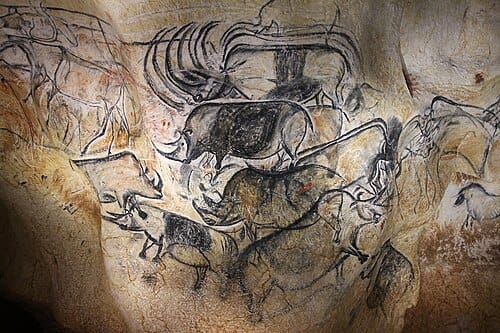
I’m so hungry, I could eat a woolly rhinoceros
Record scratch, freeze frame: Yep, that's me, an Ice Age woolly rhinoceros in a mummified wolf stomach. You’re probably wondering how I got into this situation. Well, the good news is that it was not because I am inbred, according to a new study.
That’s my pitch for a movie based on the true story of some half-digested woolly rhinoceros (Coelodonta antiquitatis) remains that were wolfed down by a permafrost-preserved pupsicle from 14,400 years ago.
Incredibly, scientists were able to sequence the genome of the rhino, which revealed that this individual still had a high level of genetic diversity in its lineage, and no signs of inbreeding. Considering that woolly rhinos vanished from the fossil record around 14,000 years ago, this study suggests that they may have experienced a very sudden population collapse, rather than a gradual demise.
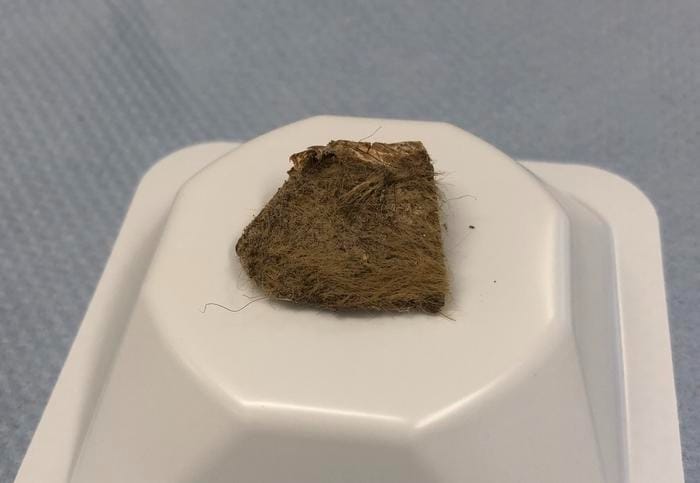
“While Late Pleistocene remains of woolly rhinoceros are numerous, very few remains exist from around the estimated time of extinction,” said researchers led by Sólveig M. Guðjónsdóttir of Stockholm University. At 14,400 years old, the mummified tissue found in the wolf is “one of the youngest known woolly rhinoceros remains.”
“Given our results, we suggest that any change at the genomic level associated with the species extinction must have taken place during the last few hundred years of the species' existence,” the team added. “We conclude that their decline toward extinction likely occurred rapidly after ∼14,400 years ago, most likely driven by rapid changes in environmental conditions.”
In other words, the last supper of a wolf that died when giant ice sheets still covered much of the Northern Hemisphere has opened a window into the rich heritage of this rhinoceros—and the sudden downfall that awaited its relatives.
And for anyone interested in cryptids, the authors note that the “last appearance dates in the fossil record do not exclude the possibility that the species persisted for longer.” Does this mean that woolly rhinos live on in some untrammeled wilderness to this day? Definitely not, they are dunzo. But it does raise the tantalizing question of when and where the last woolly rhino took its final steps, ending a long and storied line.
In other news…
Save wildlife, stay off the menu
Here’s one way to get people to care about biodiversity loss: tell them that the mosquitos are out for their blood.
In a new study, scientists captured and studied 145 engorged mosquitoes from a deforested area in Brazil, which revealed a growing reliance on human blood. The results suggest that mosquitoes are more likely to seek out human blood in areas experiencing biodiversity loss.
“In the present study, human blood meals were detected in nine species” including mosquitoes that “spread dengue, yellow fever, Zika, and chikungunya,” said researchers led by Dálete Cássia Vieira Alves of the Federal Rural University of Rio de Janeiro. “The results revealed a clear tendency for the captured mosquito species to feed predominantly on humans.”
“Deforestation reduces local biodiversity, causing mosquitoes, including vectors of pathogenic agents, to disperse and seek alternative food sources…such as humans,” the team said.
In other words, a future of biodiversity collapse is going to be buzzy, and itchy, and deadly, given that mosquitoes are notoriously the most dangerous animals to humans—killing roughly a million people per year—due to their capacity to spread pathogens. It would be great if we could all conserve wildlife for solely altruistic reasons, but a little nightmare fuel is useful in small doses.
Same-sex sexual behavior plays many roles in primates
Same-sex sexual behavior (SSB) is common in nature—documented in more than 1,500 animals—especially among socially complex species like primates. Now, scientists have presented a comprehensive review of these sexual bonds in dozens of non-human primates, which revealed that the interactions are context-dependent and may serve a variety of evolutionary functions.
“In baboons, for example, females form affiliative networks, through grooming and possibly SSB, to manage group tension, especially during unstable periods such as hierarchical shifts,” said researchers led by Chloë Coxshall of Imperial College London. “Male rhesus macaques use SSB to navigate aggression and shifting dominance by forming coalitions. Those engaging in SSB are more likely to ally and support each other in competition.”
While the study focused on non-human primates, the team also speculated about the possible evolutionary links between SSB in humans and non-human primates, but warned that the study “does not address human sexual orientation, identity or lived experience.”
“While acknowledging that cultural biases have historically shaped how SSB is reported in animals, we hope this study encourages further research into its evolutionary and social roles in primates at large,” the team concluded.
Don’t be deceived by the asexual yams
Even in all of its diverse configurations, sex is simply not everyone’s bag. Lots of species have opted to eschew it entirely in favor of asexually cloning themselves, such as the Asian yam Dioscorea melanophyma.
This yam has evolved a clever technique to disperse its version of “bulbils,” the asexual version of seeds, by dressing them up like berries so that birds will eat them, reports a new study. This helps the plant spread its clones far and wide without the need for sexual reproduction.
“We show that the yam Dioscorea melanophyma—which has lost sexual reproduction—evolved black, glossy bulbils that mimic co-occurring black berries and entice frugivorous birds to ingest and disperse them,” said researchers co-led by Zhi Chen of the Kunming Institute of Botany at the Chinese Academy of Science and Guillaume Chomicki of Durham University.

The team found that birds preferred real berries “yet they significantly consumed bulbils too” and “could not visually discriminate bulbils from berries.” In this way, the yams use “mimicry to deceive birds and achieve longer dispersal distance,” the study concludes.
It’s amazing how many adaptive strategies boil down to pranking one’s fellow Earthlings. So if you’re a bird, beware the sham yam yums. And if you are looking to name a band, the Asexual Yams is officially out there as an option.
Thanks for reading! See you next week.