
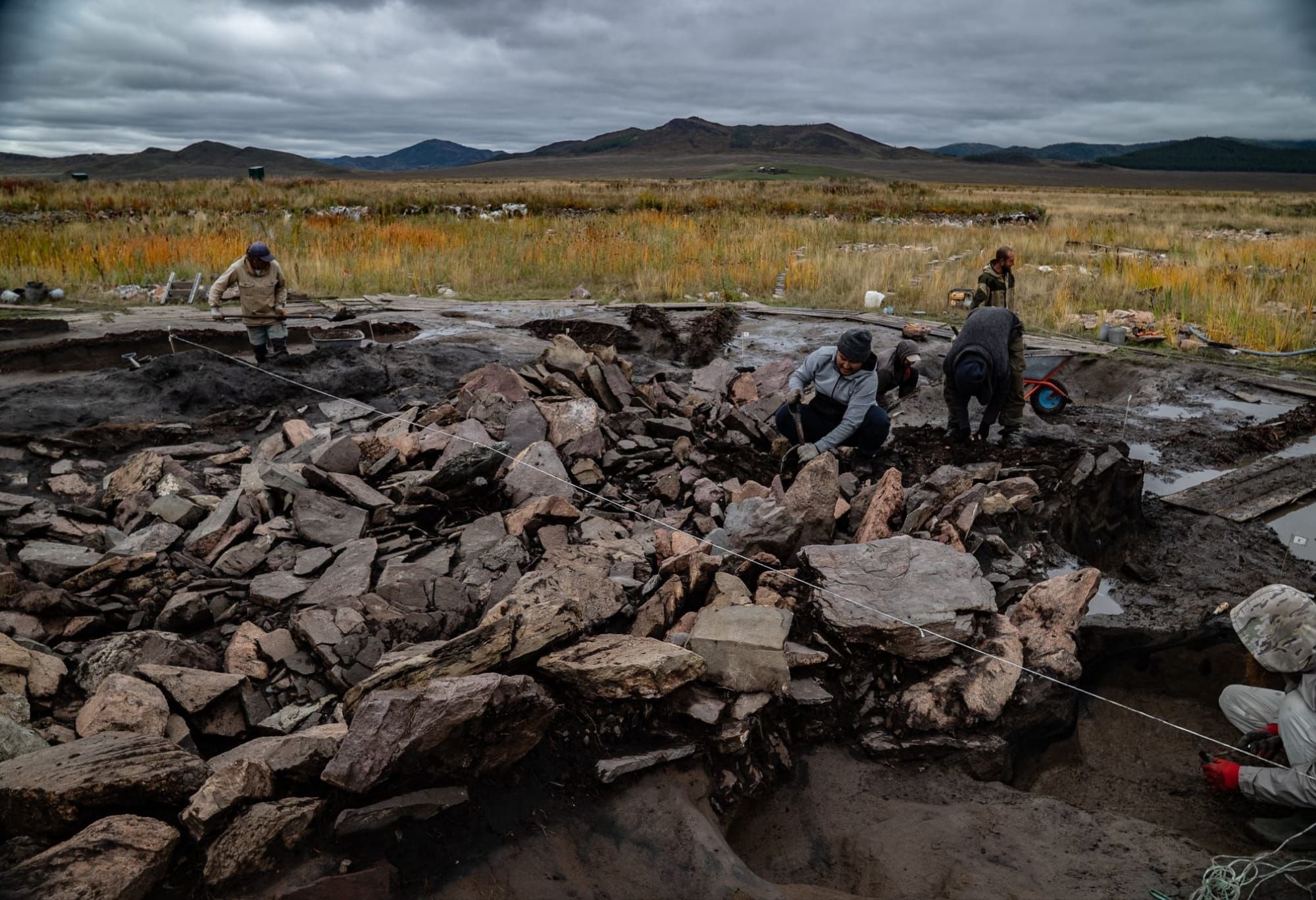
Archaeologists have discovered the oldest direct evidence of psychoactive cannabis use in a Siberian tomb that dates back 2,800 years and was the site of human and horse sacrifices, according to a study published on Thursday in Science.
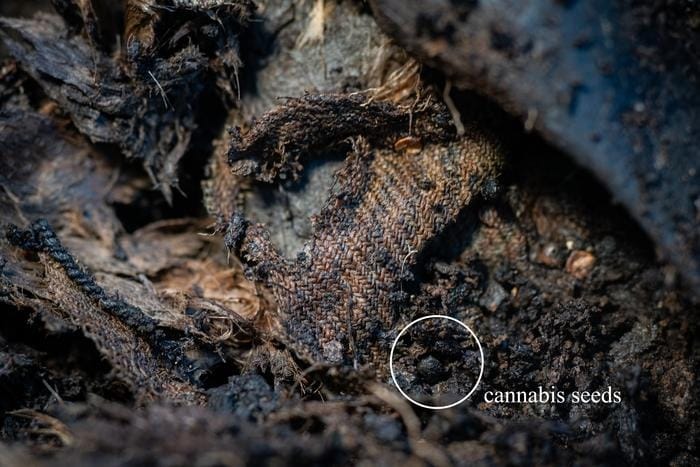
During excavations of the tomb, a team found more than 1,400 cannabis seeds scattered around the remains of several Iron Age individuals, and even identified cannabinoids—including the active compound tetrahydrocannabinol (THC)—in a person’s preserved hair.
Though humans cultivated cannabis for many millennia before the Iron Age, this is by far the earliest clear-cut proof that the plant was consumed for its psychoactive effects, which have made it one of the most widely used drugs in the world today.
The discovery is “absolutely crazy,” said Gino Caspari, an archaeologist at the Max Planck Institute of Geoanthropology and the University of Bern who led the study, in a call with 404 Media. “People have been speculating a lot about psychoactive use of cannabis in the past, but to actually pin it down and prove it with soft tissue evidence of the humans involved—that is something very special.
“That is an absolutely unique and extremely rare combination of evidence,” he added.
Cannabis has a multifaceted history as a recreational drug and a pop cultural touchstone, as well as a traditional medicine that has been used for millennia by many cultures, including in China, Russia, and around the Mediterranean Basin. Humans began cultivating the plant as early as 10,000 years ago for its oil and fiber, but the origins of its specific consumption as a psychoactive substance is unclear.
Cannabis was important to the Scythian culture, a horse-riding people that emerged on the Eurasian steppes in the 9th century BCE and became a major force in the subsequent centuries. The historian Herodotus described Scythian rituals that involved ceremonial burning of cannabis in enclosed spaces, and their cannabis residues and products have been found at Scythian archaeological sites.
“Herodotus speaks about the Scythians being quite fond of cannabis in the first place, so this has always been in the back of our minds,” Caspari said. “But it is so incredibly rare to find well-preserved plant remains that this is not really something you can hope for or look for. This is ultimately complete luck and chance.”
Now, Caspari and his colleagues have hit an archaeological jackpot at a tomb known as Tunnug 1, located in Siberia’s Uyuk River Valley. Six elite individuals are interred in the interior of the royal mound inside several tree-trunk coffins and wooden structures. They are mostly men, though one woman is also present. The mound is lined with remains of sacrificed humans, as well as dozens of sacrificed horses, close to the surface.
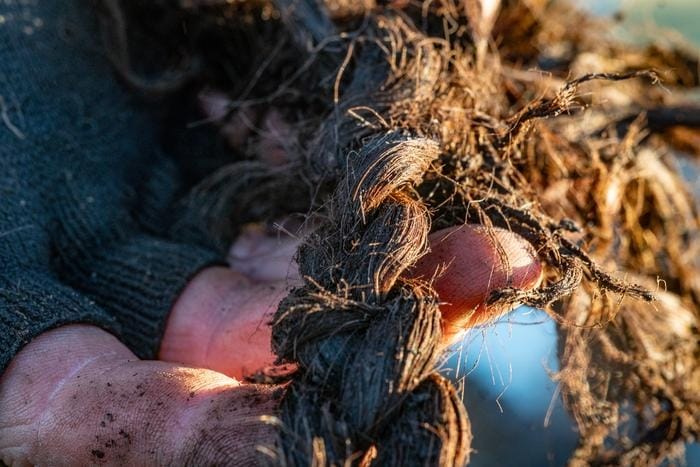
As the team carefully worked through the layers of the burial, they found hundreds of cannabis seeds distributed around the bodies that were dated to the 8th century BCE. However, the real smoking blunt was the detection of cannabinols in preserved hair samples, including traces of THC, the most important mind-altering compound in cannabis.
The results confirm contemporaneous accounts of Scythians as cannabis consumers who used the plant for purification and mortuary rituals. It’s possible that the people selected as human sacrifice consumed the drug to prepare them for their unenviable fate.
“It being in a burial context, of course, there's a ritual aspect to it,” Caspari explained. “It might be a little bit more sinister, but this is speculation. We do have a lot of horse sacrifices and also some human sacrifices on the surface of the mound. And if you imagine humans being sacrificed, they usually don't like that very much. It might be advantageous to have them dosed a little bit, at least, to make the procedure a bit more humane, if you will.”
“Of course, that is speculation,” he cautioned. “We don't have any written sources about that particular area, but that's at least one way we could go with our interpretation.”
The researchers hope to learn more about the context and meaning of the cannabis use at Tunnug 1 through continued excavations and an analysis of more hair samples. What’s more, the team plans to conduct DNA analysis on the seeds, an approach that could yield new insights about the murky history of cannabis domestication and its early use as a psychoactive substance. This line of research could also shed light on modern cannabis strains, and may even be revived for new medicinal or recreational purposes.
“We've already sequenced part of the seeds to unravel and disentangle the domestication history,” Caspari said. “Funnily enough, we don't even know what wild cannabis actually looks like because there has been so much intermixing and interbreeding since the 70s, when people started experimenting and trying to get more potent drug variants. Some of the initial landraces and the actual wild cannabis has been lost.”
“Now, having DNA that's almost 3,000 years old, we will be able to take that step back into the past and see what an unaltered cannabis would have looked like,” he said. “In the ideal case, we might even be able to work together with the medical industry and bring some of these very ancient genetics back into cannabis production to potentially help people with very interesting and distinctive cannabinoid combinations.”
Put that in your pipe and smoke it. Regardless of where future research into this ancient plant leads, this long-sought evidence of cannabis use thousands of years ago confirms the rich cultural legacy of the plant across time and space.
“As an archeologist, I might be a bit biased here, but I think the history and cultural practices really do matter,” Caspari concluded. “I think our findings do indeed inform current discussions on legalization, on usage of medical cannabis—which is very much an ongoing discourse—and I think what we've been able to do with this study is provide an anchor, and show that there is this deep cultural history to the use of cannabis as a psychoactive drug.”