
Welcome back to the Abstract! Here are the studies this week that invaded our brains, thought fast, swapped coffins, and hit the art gallery.
First, an ancient viral pandemic that afflicted many of our primate relatives—but somehow missed humans—may help explain how we got so smart (relatively speaking). Then: mammal brains eat crow, an upcycled sarcophagus, and a trip to the starry Provençal summer of 1889.
As always, for more of my work, check out my book First Contact: The Story of Our Obsession with Aliens, or subscribe to my personal newsletter The BeX Files.
Your brain on viral content
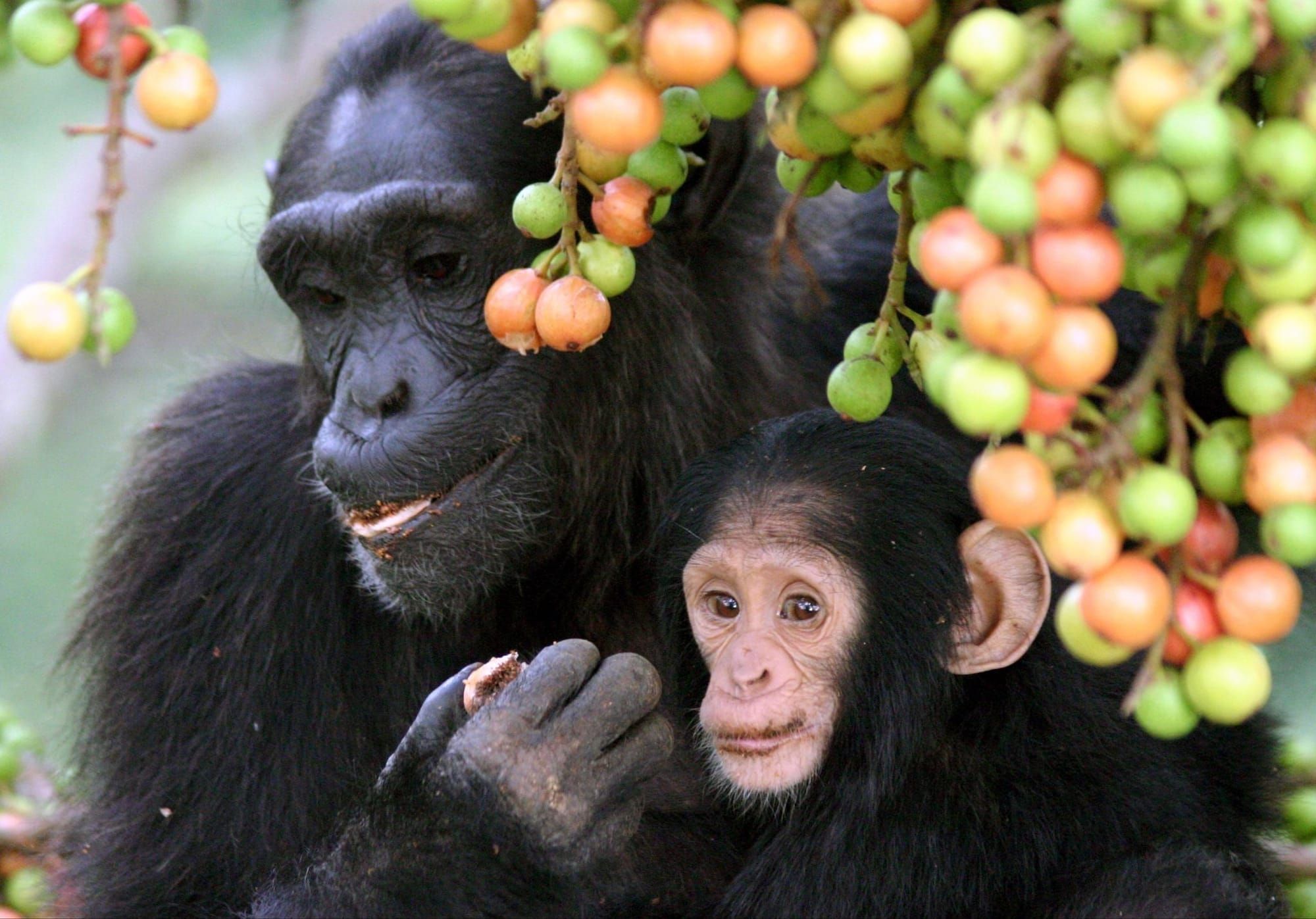
A virus that infected chimpanzees millions of years ago shaped the divergence of human and chimp brain development, shedding light on how our own species came to be more cognitively complex than our closest living relatives, according to a new study.
Retroviruses are infectious agents that can invade the genomes of their hosts and insert copies of their own genetic material, producing long-term evolutionary effects. Researchers have now discovered a family of these endogenous retroviruses called PTERV1—which are abundant in chimpanzees, but absent in humans—that influence brain development.
“Among primates, the human brain stands out as the largest and most complex due in part to an increase in cortical neurons and increase in synaptic connectivity,” said a team led by researchers from Lund University. “With a size roughly three times that of our closest living evolutionary relative, the chimpanzee, it has unique cognitive capabilities.”
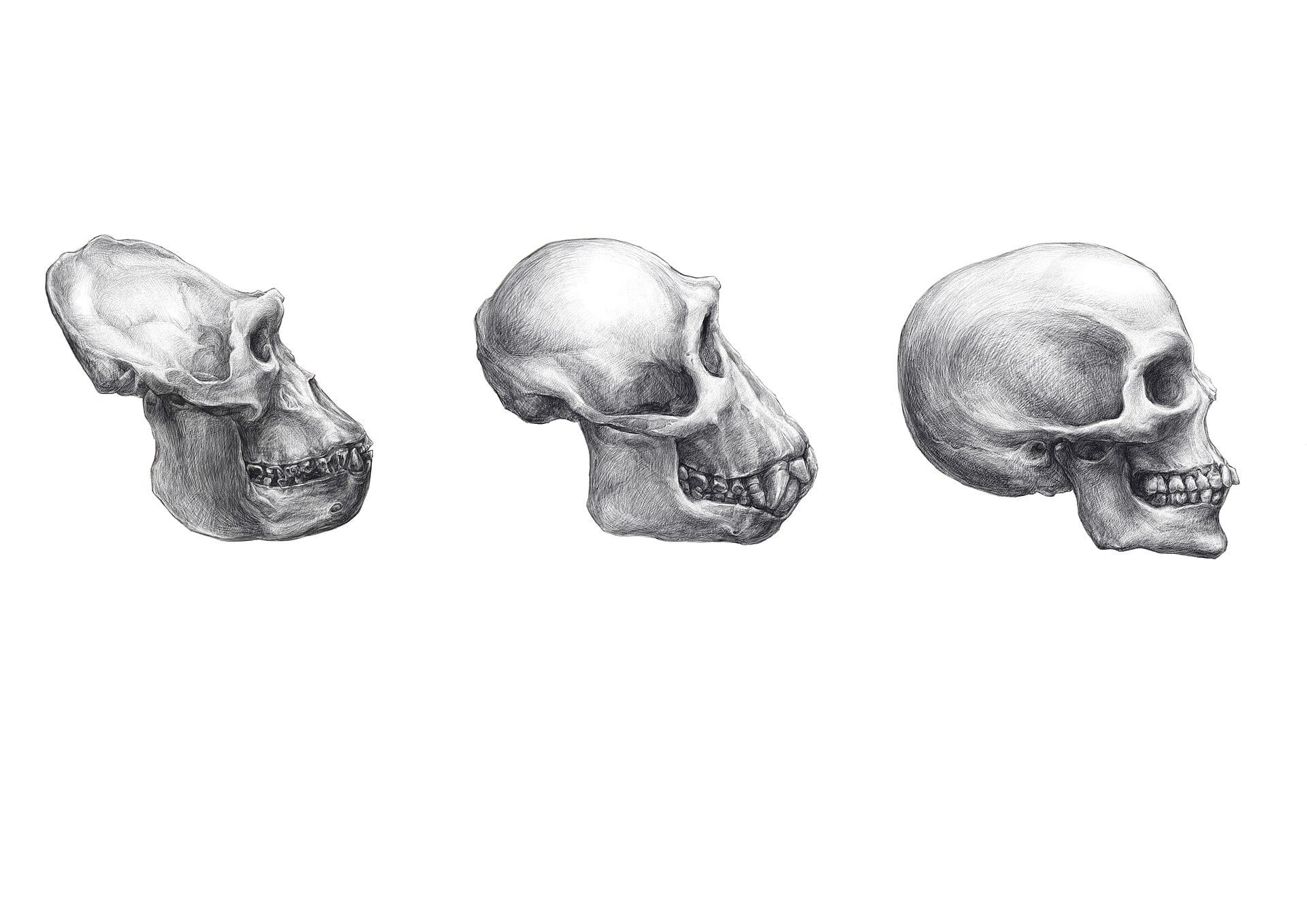
“The underlying genetic divergences responsible for these differences are still poorly understood,” the researchers continued, noting that their new findings “reveal a mechanism by which endogenous retroviral insertions contributed to human-chimpanzee brain divergence.”
The team discovered the mechanism using human and chimpanzee brain organoids, which are miniature clusters of neurons grown from stem cells that can model some aspects of brain development. The results revealed chimpanzee-specific PTERV1 insertions on chromosome 19 that silences a gene called LINC00662. In contrast, this gene is active during human brain development, and affects neuronal maturation, development, and outgrowth.
“These PTERV1 insertions are thought to have originated from infections that occurred in the ancestors of African apes about 5 to 7 million years ago,” said the team. “PTERV1 elements are found in chimpanzees, bonobos, and gorillas…Notably, the absence of PTERV1 insertions from the human genome suggests that either the human and chimpanzee lineages did not occupy the same habitat at the time or that germline-competent cells of the human ancestor were resistant to this infection.”
“In summary, this study describes how retroviral insertions contributed to the functional divergence of the human and chimpanzee brain, providing a mechanism by which retroviral infections influenced primate brain speciation,” they added.
In other words, early humans appear to have dodged consequential pandemics that widely infected our primate brethren simply because they had a random immunity to it, or roamed different ranges. While retroviruses are far from the only factor in our cognitive development, it’s still eerie to think that our human brain—that brilliant lump you are using to read these words—is shaped by dumb luck.
In other news…
Another brain to crow about
Schmidbauer, Philipp and Nieder, Andreas. “Ultrarapid decision-making in an avian brain.” Science.
Speaking of interspecies brain-offs, it seems the birds have got us beat—at least when it comes to snap decisions. Scientists have discovered that carrion crows (Corvus corone) can make ultrafast choices in “approximately 235 milliseconds on average, which is roughly twice as fast as has been observed in monkeys or humans and without sacrificing accuracy,” according to a new study.
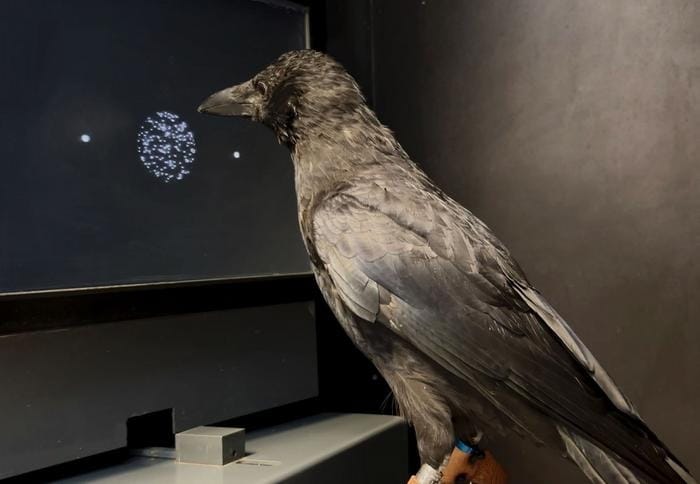
A pair of researchers observed two crows performing a common discrimination task in which dots on a screen move left, right, up, or down. The crows selected the predominant direction by pecking a target circle on a touchscreen, after which they were rewarded with promptly dispensed treats. The crows performed the task dozens of times at extremely high speeds, achieving an overall choice accuracy of 75 percent (crow 1) and 73 percent (crow 2).
“Having diverged from mammals more than 360 million years ago, birds evolved a distinct nuclear pallium”—a part of the vertebrate forebrain—”that lacks the layered neocortex yet retains key organizational and computational principles characteristic of mammalian brains,” said study authors Philipp Schmidbauer and Andreas Nieder of the University of Tübingen.
“These findings highlight the extraordinary efficiency of avian decisionmaking circuitry, possibly shaped by evolutionary pressures for rapid visuomotor control,” the team added.
So if anyone ever calls you a birdbrain, the correct response is “thanks.”
Who is this sarcopha-guy?
Archaeologists may have finally discovered the mysterious identity of an ancient skeleton buried in a Roman-era sarcophagus that was first unearthed on the grounds of Westminster Abbey more than 200 years ago.
Despite an inscription on the sarcophagus identifying the occupant as Valerius Amandinus—a wealthy Londoner who lived between 300 to 400 AD—the bones likely belong to a medieval monk named Ælfwig, born centuries later in the year 993.
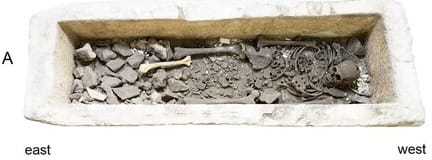
“The burial was of a male, probably in his late forties, and was radiocarbon dated to around the turn of the 11th century,” said study author Rodwell Warwick of Westminster Abbey. “The corpse had been laid in a timber coffin and covered with lime; it was then placed inside the sarcophagus. It is argued that this was the prestigious burial of Abbot Ælfwig.”
The sarcophagus was exhumed and moved to a northern courtyard during King Henry III’s reconstruction of the abbey in the mid-1200s, where it laid for about six centuries. On Easter Monday 1820, the coffin was “wantonly broke by workmen” according to a note from an unknown contemporary archivist. Any grave goods were likely plundered by this crew and the sarcophagus was hastily put back together and reburied with the bones all jumbled up inside. It was then re-discovered in 1869 with a note that the burial “‘had been subjected to violence by a previous examination.”
It turns out anything is recyclable—even sarcophagi. The discovery that this Roman coffin at some point took on another tenant now raises the new question of how the earthly remains of Valerius Amandinus got evicted and where they ultimately wound up.
“The Starry Night”—of July 22, 1889?
With its vibrant colors and psychedelic swirls, Vincent Van Gogh’s “The Starry Night” is one of the most beloved and recognizable paintings in art history. For years, experts and admirers have debated whether the mesmerizing skyscape, which van Gogh painted during an asylum stay in Provence, was a fantastical portrayal or if the artist included realistic renderings of astronomical phenomena.
Now, a team has proposed that the celestial elements of the painting match with a specific night—July 22, 1889—when “the waning-crescent Moon, Venus, and the Hyades cluster gather within that narrow frame,” according to a new study. This date conflicts with the conventional timeline of van Gogh painting “The Starry Night” weeks earlier in June.
“The question dividing fantasy from observation remained a matter of qualitative interpretation and was never treated in a physically decidable form,” said researchers led by Elijah Jeong-hyun Kim of Kyung Hee University. “The approach of this study shifts the burden of proof: if the celestial arrangement on the canvas matches a specific dawn sky, that match itself becomes what the imaginative reading must explain.”
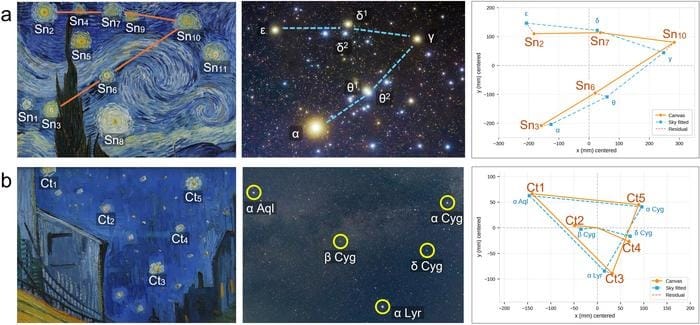
The team’s findings “suggest that the night sky in ‘The Starry Night’ originated from observation of a specific celestial arrangement, and call for reconsidering the June dating,” they continued. “This framework can extend to historical night paintings as a reproducible scientific art history.”
I love a hyper-niche new subfield—let’s call this one “forensic astroartistry.” Regardless of the painting’s exact date of origin, it has inspired wonder and fascination for more than a century—including these new stellaria of long-lost summer nights.
Thanks for reading! See you next week.