
Advertisement
ICE

DHS Says Critical ICE Surveillance Footage From Abuse Case Was Actually Never Recorded, Doesn't Matter

Court records reveal the incredibly sad state of ICE's evidence retention systems.
DHS Says Critical ICE Surveillance Footage From Abuse Case Was Actually Never Recorded, Doesn't Matter
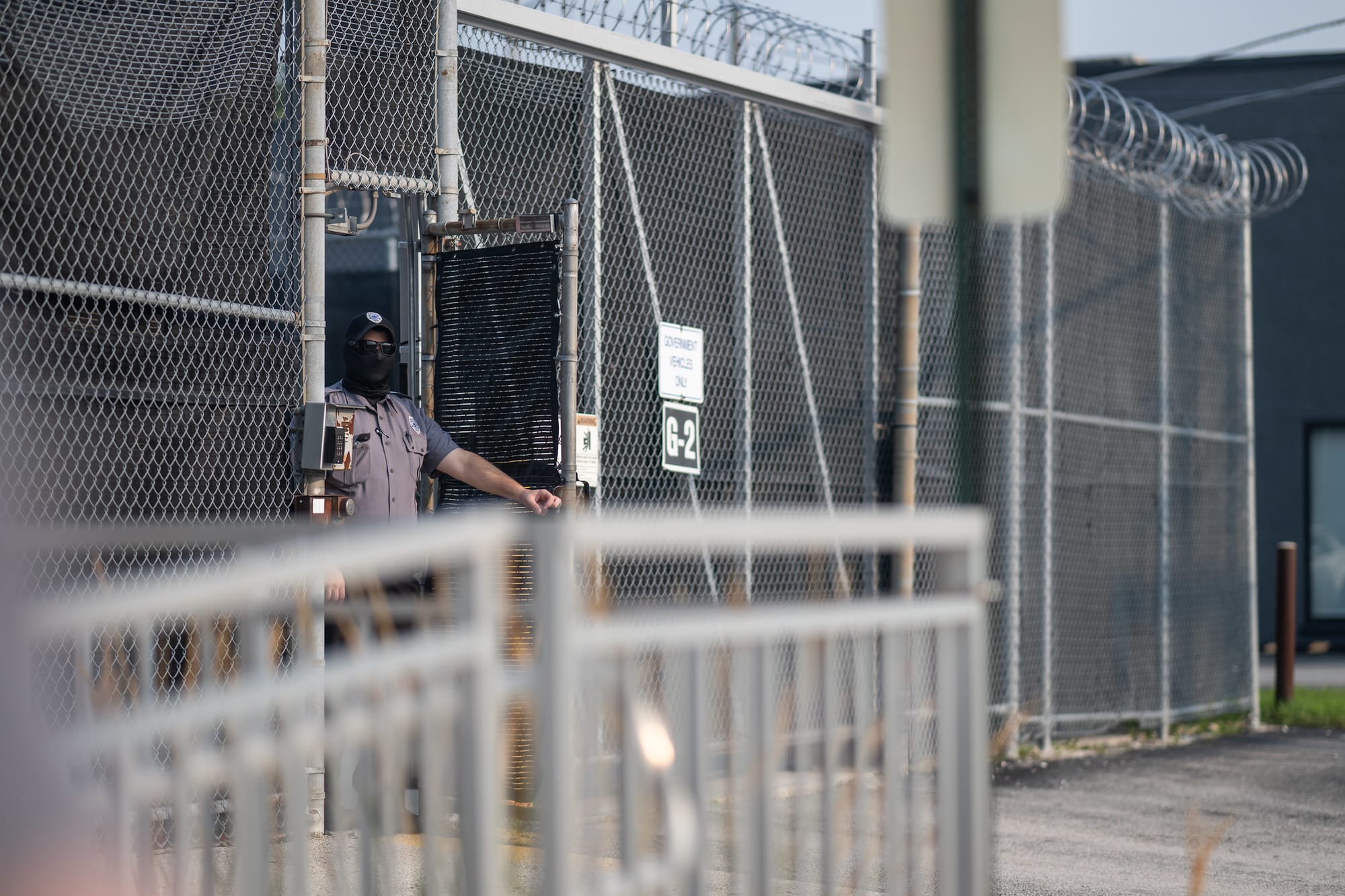
Image: Paul Goyette via Flickr

The Department of Homeland Security now says that two weeks of critical surveillance footage from within Immigrations and Customs Enforcement’s Broadview detention center wasn’t actually lost in a “system crash,” but rather, was never recorded in the first place. It is also arguing that, had the footage been recorded, it would be irrelevant because prisoner living conditions have improved since the time it was supposed to be recorded.

The filings, made by U.S. attorneys on behalf of Greg Bovino, Kristi Noem, and other DHS officials, are the latest in an ongoing class action lawsuit against the U.S. government filed by detainees at the Chicago-area ICE detention center. The people suing the government in this case argue that they were held in subhuman, illegal conditions at Broadview: “They are denied sufficient food and water […] the temperatures are extreme and uncomfortable […] the physical conditions are filthy, with poor sanitation, clogged toilets, and blood, human fluids, and insects in the sinks and the floor […] federal officers who patrol Broadview under Defendants’ authority are abusive and cruel,” their complaint reads in part.

As we have reported, the plaintiffs’ lawyers have been trying to get the government to produce nearly two weeks worth of surveillance footage from inside the detention center from between October 20 and October 31, 2025, which was a critical period where ICE was detaining people en masse in Chicago. The government first said that the footage had been “irretrievably destroyed,” but that it was working with its vendor, a one-person company called Five by Five, to try to recover it. In a later filing, it said that the footage was lost due to a nonspecific “system crash.” 

In its most recent filing, however, the government claims that the footage was never recorded in the first place and, furthermore, it would appreciate if the plaintiffs would stop asking for it because it would be of “marginal relevance” anyway:

“The Broadview video surveillance footage for October 20 to October 31, 2025, is not missing. Rather, due to a technical issue, the Video System failed to record video or audio footage during that period. Contractors manage the system for the defendants. An employee of the contractor with personal knowledge of events explained during a meeting with counsel of record how he discovered that the System did not record footage from October 20 to October 31, 2025,” the government’s attorneys wrote. “His explanation of events eviscerates any vestigial relevance of plaintiffs’ Third Set of discovery requests which assumes that spoliation occurred in this case.”

“As plaintiffs are aware, their allegations of negligence or spoliation of the video footage at Broadview are unfounded,” they added. “The video system did not record any footage from October 20th to 31st (in the morning) due to equipment malfunction or failure. So, plaintiffs’ suggestion that information about the video system is necessary because the ‘circumstances under which this footage was lost or not recorded remain unclear’ is simply false … It is beyond the scope of discovery for plaintiffs to assume the role of ‘quality service inspectors’ for the video system at Broadview. Defendants should not be compelled to produce information calculated to show whether the failure to record was due to poor maintenance practices”

The Department of Justice’s lawyers wrote that the court needs to “rein in plaintiffs’ attempt to seek discovery beyond what is is necessary,” and that its efforts to obtain various information such as “document retention policies, failure of the video system at Broadview to record footage, and efforts to respond to discovery are inappropriate. The requests plaintiffs seek to enforce in their motion are highly objectionable.”  

In a separate filing from earlier this month, DOJ lawyers argued that the court should limit the scope of information that it is required to produce for the case and that the court should not focus on what the conditions at Broadview were in the past, but it should focus on what they are in the present because a temporary restraining order from the court required the government to improve detainee conditions: “Discovery on past—rather than current—conditions at Broadview are unproductive. During weekly visits to Broadview, plaintiffs’ counsel must have observed current conditions of confinement at the facility and interviewed individuals who were there to be processed. The conditions of confinement at Broadview, which, as the court is aware, are vastly changed since the [temporary restraining order] was entered and do not now present the issues that existed earlier,” they wrote. “Plaintiffs continue to insist on discovery about past conditions that is not necessary.”

“As some plaintiffs’ counsel will have observed during their in-person visits, the conditions at Broadview are no longer what they were when this complaint was filed,” they added. “Things have changed at Broadview drastically, with it returning to be a very short-term processing center without overnight stays. The scope and urgency of plaintiffs’ multiple discovery requests are no longer proportional to the needs of the case as it exists, if they ever were […] this historical information is unhelpful to the court as it decides whether current conditions at Broadview violate the U.S. Constitution.”

Meanwhile, a filing by attorneys for the plaintiff, from the MacArthur Justice Center, the American Civil Liberties Union of Illinois, and the Eimer Stahl law firm, provides more details about how janky Broadview’s surveillance system allegedly was and highlights why the lost footage is critically important. The attorneys note that there is an “enormous gap in footage from October 20 to 31 (in the morning), when Plaintiffs were at Broadview and unconstitutional conditions were at their apex. The circumstances under which this footage was lost or not recorded remain unclear, and Plaintiffs are investigating the possibility of spoliation warranting an adverse inference against Defendants regarding conditions at Broadview during this time.”

According to court records, the system was managed by a company called Five by Five Management, LLC, which is a “one-person firm,” as well as another contractor who is not named in the filing. Apparently there was a server that crashed on October 20, which led to footage not being recorded, but information about how or why this happened is “in the government’s hands,” the plaintiffs attorneys wrote. 

Other important information is on something the court is calling the “old server,” which is a server that is owned by Five by Five Management and was disconnected on November 24; the plaintiffs’ attorneys say that they are having trouble getting information from that server, and that Five by Five Management wants to be paid for it. 

The filing states that the government and attorneys for the plaintiffs asked Five by Five for a written plan to recover as much data from the old server as possible, but that it was “short on technical detail, and it requested a substantial monetary payment for the project plus  indemnification from all parties. These are non starters” 

“The Old Server is Government property and Defendants are responsible for producing the discoverable data that exists on it,” the plaintiffs’ attorneys wrote. “Defendants cannot punt to their contractor and require Plaintiffs to make a deal with Five by Five in order to obtain information that Defendants own and control. Thus, even as to responsive information that may actually be stored on the Old Server, Plaintiffs are nowhere near getting access.”

The owner of Five by Five Management is set to be deposed in the case on Thursday. The judge in the case rejected much of the government’s argument and said that it needs to respond in detail about what happened to the video. The court records used to report this story can be found here.

Advertisement