

Welcome back to the Abstract! Here are the studies this week that had off-Earth offspring, took stock of a mortal threat, productively slept, and sought out old friends.
First, what to expect when you’re expecting a star child. Then: how to fight cancer, the nap-plications of lucid dreaming, and why old rats don’t make new friends.
As always, for more of my work, check out my book First Contact: The Story of Our Obsession with Aliens or subscribe to my personal newsletter the BeX Files.
How to make babies in space (Don’t)
It’s hard enough to have babies on Earth, let alone off it. But if humans ever do expand beyond our planet to live in orbital outposts or on other planets, we would presumably want to build healthy families there. Even in the near term, it is conceivable that space will be flooded by rich tourists eager to join the 250-mile-high club, raising questions about how to practice safe space sex (or if that is even possible).
In a new study, scientists review the medical and ethical challenges of space reproduction, noting that while space sex is “often overshadowed by sensationalized or speculative portrayals, the topic…nonetheless demands serious attention.”
“Space is toxic to terrestrial life. It is an inherently hostile environment for terrestrial biology to thrive,” said researchers led by Giles Anthony Palmer of the International IVF Initiative Inc. “The microgravity, cosmic radiation, circadian disruption, pressure differentials, and extreme temperatures found in orbit or beyond present unique and multifactorial stressors to the human body.”
“As we enter a new era of space exploration, defined by longer missions, broader participation, and eventual human settlement beyond Earth, the question is not simply whether reproduction can occur in space, but whether human fertility can be preserved, protected and comprehensively understood in an environment fundamentally different from that in which our species evolved,” the team added.
The study provides a comprehensive review of how various space environments might impact fertility, pregnancy, labor, and health outcomes of children. For example, studies of rodent reproduction in space show higher risks of abnormal cell division and impaired development; meanwhile, the inherent dangers of pregnancy and labor are significantly amplified in space environments.
“The question of whether humanity should reproduce beyond Earth is no longer hypothetical—it is a pressing ethical frontier,” the team concluded. “In the context of commercial spaceflight, where ambition often outpaces caution, the stakes are higher than ever. Without robust frameworks, rigorous research, and a deeply human commitment to ethical principles, there is a risk of exporting not just life but injustice, exploitation and harm into the cosmos. To be worthy of the stars, we must earn our place, not only through technological prowess, but through ethical wisdom.”
In other news…
Let’s get cancer’s ass
Roughly ten million people die from cancer each year, making it a leading cause of morbidity worldwide. While many cancers are not preventable, scientists set out to estimate just how much of the global cancer burden can be attributable to “modifiable risk factors,” meaning behavioral, environmental, or occupational factors that influence the odds of developing cancer.
The results revealed that “nearly 4 in 10 cancer cases worldwide in 2022 could have been prevented by eliminating exposure to the risk factors considered in this study,” which include smoking, alcohol consumption, and contaminated environments, said researchers led by Hanna Fink of the World Health Organization's International Agency for Research on Cancer.
“Smoking (15.1%), infections (10.2%) and alcohol consumption (3.2%) were the leading contributors to cancer burden,” the team added. “Lung, stomach, and cervical cancers represented nearly half of preventable cancers. Strengthening efforts to reduce modifiable exposures remains central to global cancer prevention.”
The researchers also found “obvious gendered patterns in causes of cancer” such as higher rates of smoking and alcohol consumption in men, and higher BMI in women. While there is an enduring allure to the idea of a cancer cure-all, this study underscores that the disease emerges from a complex interplay of factors, only some of which are under our control.
To sleep, perchance to lucid dream
Scientists have gone ahead and done an Inception. In a new study, 20 experienced lucid dreamers were presented with puzzles matched with sound cues, which were then played as the participants slept to help them crack unsolved tasks in their dreams.
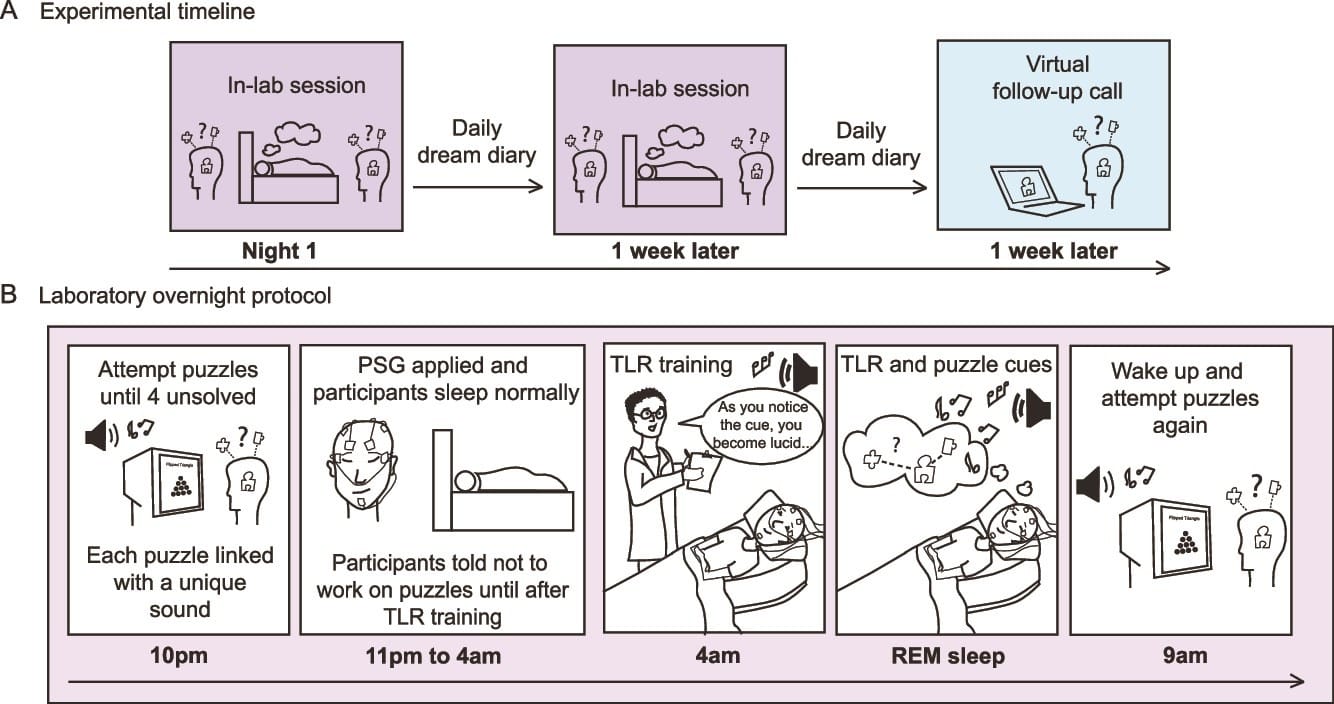
“Whereas dream content is notoriously difficult to control experimentally, here we induced dreams about specific puzzles by presenting associated sounds during REM sleep,” said researchers led by Karen R. Konkoly of Northwestern University. “We preferentially recruited experienced lucid dreamers, intending for them to receive our real-time instructions in their dreams about which puzzles to volitionally attempt to solve.”
“Although many participants did not experience lucid dreams, we nevertheless found that cues successfully influenced dream content, biasing dreaming toward specific puzzles,” the team added. “Moreover, when puzzles were incorporated into dreams, they were more likely to be solved the next morning.”
Yet more evidence for the most broadly applicable advice to humanity: sleep on it.
Despite all my rage I am still just a rat in a maze
People get set in their ways as they get older—and that’s apparently true for rats, according to this new research. To probe the effects of age on mammalian social behavior, researchers obtained 169 male rats in two age cohorts: “young adults” at six months old and “aged” rats that were way over the hill at two years old.
A series of rat mixers in water mazes revealed that the rodent elders were as likely to interact with rats as youngsters, but nearly half of them preferred to mingle with rats that were familiar to them, rather than socializing with new faces.
“Results for the aged rats were strikingly different from young in two ways,” said researchers led by Subhadeep Dutta Gupta of the National Institute on Aging in Baltimore. “First, as a group, aged rats failed to display a reliable social novelty preference overall” and “second, inter-individual variability was significantly greater among old animals, with nearly half exhibiting a phenotype not seen in the young group, comprising an apparent social bias for the familiar conspecific.”
I think we can all relate to an occasional social bias for familiar conspecifics. To that end, the study concludes with a truth bomb: “It is important to recognize that a brief session of social interaction with a stranger inevitably falls short in matching the depth of familiarity established through enduring human social relationships.”
In the words of the ultimate rat elder, Master Splinter: “Help each other, draw upon one another, and always remember the true force that binds you.”
Thanks for reading! See you next week.