
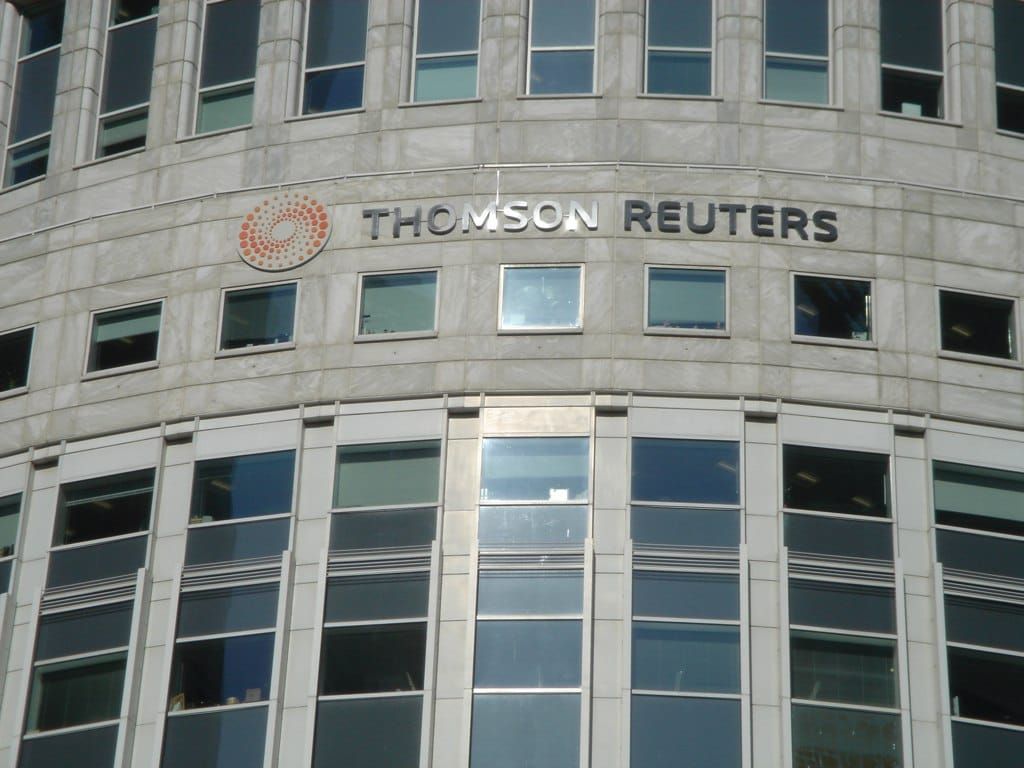
Thomson Reuters, the technology and content conglomerate that owns the Reuters media agency but also owns and operates the investigative CLEAR database, fired a longstanding employee after they spoke out about the company selling data products to Immigration and Customs Enforcement (ICE), according to a lawsuit filed on Tuesday.
The lawsuit and firing come after more than 200 employees wrote a letter to Thomson Reuters leadership about the company’s contracts with ICE and the Department of Homeland Security (DHS).
“For nearly two decades, I helped Thomson Reuters build the legal resources that lawyers and law enforcement trust. When I saw evidence that our products were being used to harm people and undermine the law, I did what anyone should do—I raised the alarm. Thomson Reuters’ response was to fire me,” Billie Little, who was a senior attorney editor at Thomson Reuters, said in a statement shared with 404 Media by her attorneys.
Thomson Reuters fired Little on March 20, according to a press release Little’s attorneys sent to 404 Media on Tuesday. It says that Little led hundreds of coworkers to raise concerns that Thomson Reuters’ CLEAR database “was being used to compile and deliver sensitive personal and location data to federal immigration authorities in ways that circumvented and violated state sanctuary laws, privacy protections, and the Constitution.”
CLEAR is Thomson Reuters’ primary data broker product. It contains all sorts of personal data, including peoples’ names, addresses, car registration information, Social Security numbers, and details on someone’s ethnicity. 404 Media has repeatedly revealed links between CLEAR and specific ICE tools, including references to CLEAR in documentation for the Palantir tool ICE uses to find neighborhoods to raid called ELITE, and a license plate reader app called Mobile Companion.
In early March, the Minnesota Star Tribune reported Thomson Reuters employees wrote the letter to leadership expressing their unease with the company’s ICE and DHS contracts. Later that month, The New York Times reported more than 200 employees had signed the letter.
After that coverage, Thomson Reuters launched an internal investigation targeting Little, and was fired nine days later for an unspecified code of conduct violation, according to the press release.
The lawsuit, which 404 Media reviewed, claims that “Little is, to her knowledge, the only employee who was fired. She was singled out because she was the most visible leader and Thomson Reuters sought to make an example of her.”
The lawsuit is filed in the District Court for the District Oregon and is seeking reinstatement, back pay, compensatory damages, and attorney fees, the press release says.
“Oregon's whistleblower law exists for exactly this situation. It protects employees who report in good faith that their employer may be breaking the law. Thomson Reuters should have thanked Billie for raising concerns about the use of its products instead of hiding behind a vague Code of Conduct violation to punish an employee for exercising rights that Oregon law expressly guarantees,” Maria Witt, an attorney from Albies & Stark LLC representing Little, said in a statement.
Thomson Reuters did not immediately respond to a request for comment.