
Advertisement
Privacy

‘The Government Hopes To Set a Precedent’: An Interview With the Man Charged for Allegedly Wiping His GrapheneOS Phone

The U.S. government has charged Samuel Tunick with allegedly typing in a passcode to wipe his phone before officers could search it. “I hope people understand that the charges against me are meant to intimidate people,” he said.
‘The Government Hopes To Set a Precedent’: An Interview With the Man Charged for Allegedly Wiping His GrapheneOS Phone
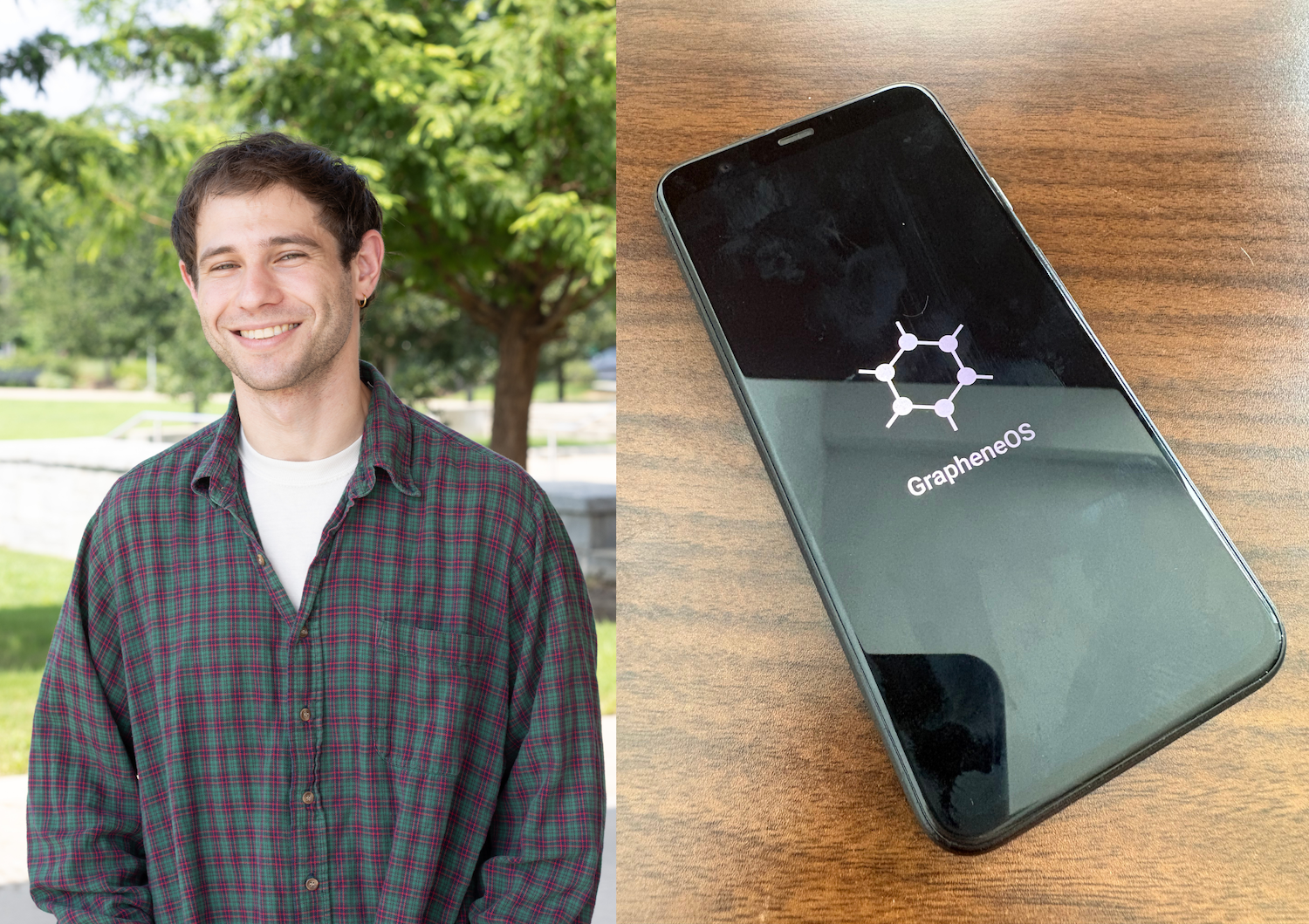
Images: Samuel Tunick and 404 Media.

In charging a man for allegedly typing in a duress password which wiped his privacy-focused GrapheneOS phone, the U.S. government is trying to intimidate other activists from protecting their data and participating in social movements, Samuel Tunick, the man charged, told 404 Media in an interview on Tuesday.

The case of Tunick, who participated in the Stop Cop City movement in Atlanta, has resonated across privacy and civil liberties circles. 404 Media first broke news of the case in December. Last week, The Guardian reported additional details including from a court hearing in the case. The maximum sentence for the alleged crime is five years in federal prison.

“I hope people understand that the charges against me are meant to intimidate people against protecting their data and their privacy, and the government hopes to set a precedent that no one has the right to privacy,” Tunick told 404 Media in a conference call with his federal public defender Matthew Dodge.

💡
Do you know anything else about this case? Or others like it? I would love to hear from you. Using a non-work device, you can message me securely on Signal at joseph.404 or send me an email at joseph@404media.co.

Asked about his reaction to the wide attention his case has gotten, Tunick said it’s “a little surprising, but encouraging that people seem to care about this issue.”

In January 2025, Tunick was returning to the U.S. from a vacation in the Dominican Republic. Dodge explained that Department of Homeland Security (DHS) officers called the airport ahead, said Tunick was coming through, and asked officers to stop him. “‘We want you to get his phone and search his phone,’” the officers said in Dodge’s retelling. 

The officers asked Tunick if they could search his bags, and he said no. The agents searched them anyway and found nothing unlawful, Dodge said. Tunick declined to be patted down, but again the agents searched him anyway, and they found nothing improper, Dodge said. Then the agents said they wanted to search his phone. Tunick declined and asked for his lawyer multiple times. Finally, the agents asked for his phone, and gave a pretence of searching for child abuse imagery, according to Dodge.

Tunick gave a code which an officer typed into the device, Dodge said. Rather than unlocking the phone, the device “went to a blank screen” and displayed the GrapheneOS logo, Dodge explained. GrapheneOS, a mobile operating system that has a wealth of privacy and security upgrades, has a duress password feature that “will irreversibly wipe the device,” according to GrapheneOS’s website. Asked for comment, Daniel Micay, the founder of GrapheneOS, pointed 404 Media to a recently published overview on the operating system’s defenses against data extraction.

With the phone inaccessible, Tunick was free to go and left the airport. Around a year later he was indicted for allegedly destroying “the digital contents of a Google Pixel” phone. Dodge said he only found one other case using the same law, a drug trafficking investigation. “This is extraordinarily rare,” Dodge said.

“The agents tried to rig this game by making this all come to a head at the airport,” he added. Ordinarily authorities would need a warrant to search the contents of someone’s phone; at an airport, those protections often do not apply. “They could have asked the judge for a search warrant for Sam’s phone if they thought they had evidence of a crime. They didn’t do that,” Dodge added.

DHS and the U.S. Attorney’s Office did not respond to a request for comment.

In the interview with 404 Media, Tunick put his prosecution squarely in the context of the sprawling cases against other Stop Cop City protesters and other activists in the U.S. more broadly. He pointed to the RICO charges against dozens of people, with 61 of those charges later being dropped (some still faced domestic terrorism charges). Tunick said that case had him listed as an unindicted co-conspirator. 

Tunick also pointed to the landmark domestic terrorism Prairieland case in which people protested an ICE facility (one of those people received a 100 year sentence for shooting a police officer), and the newly signed National Security Presidential Memorandum (NSPM-7) which the ACLU says seeks to target nonprofits and activists.

“The government hopes to set a precedent that no one has the right to privacy.”

“Many of us had a suspicion that this was kind of the resting ground for a new, more heavy-handed trend in policing in America. And that does seem to be in fact the case: that Atlanta was sort of the testing ground for a more authoritarian, heavy-handed approach to social movements,” Tunick said. As 404 Media reported in March, Proton Mail provided user data that helped the FBI unmask an anonymous Stop Cop City protester.

Tunick described to 404 Media how before the airport encounter, he tried to get a job at a Christmas tree lot. The job involved going onto the property of a school, so it required a background check. Despite not having a criminal record, he failed the background check, Tunick said. He went to the Atlanta Public Schools office to find out why, and was eventually given a phone number and told to contact the FBI, Tunick recalled. He also said a hidden camera was placed outside a house he used to live in.

Later, he found out from his lawyer that a tracker had been placed on his car. He also learned his cellphone records were subpoenaed, and he said he got an email from Google saying his Gmail account had also been subpoenaed.

“They really just tried to dig up anything they could on me and they didn't find anything,” Tunick said. “At this point, it almost seems like it’s just intended to make my life miserable and discourage participation in any sort of advocacy or activism.”

Initially, Tunick was shocked by the phone wiping charge, he said. Once that feeling faded, he said the charges made sense in the arc of government “repression that we’ve seen over the last year and a half.”

Regarding his case about being charged for allegedly wiping a phone, Tunick said, “I just hope that other citizens and activists understand that this is not a precedent that we should allow to be set.”

Advertisement