In the last few years, we’ve heard case after case where attorneys used generative AI and were caught including fake citations, quotes, and other major errors in their filings. This generally plays out in dockets, where their opponents or judges spot them and, in the polite language of the courts, scold them for wasting everyone’s time and being a disgrace to the legal profession. Sometimes, this results in serious sanctions. But it's always entertaining to read.
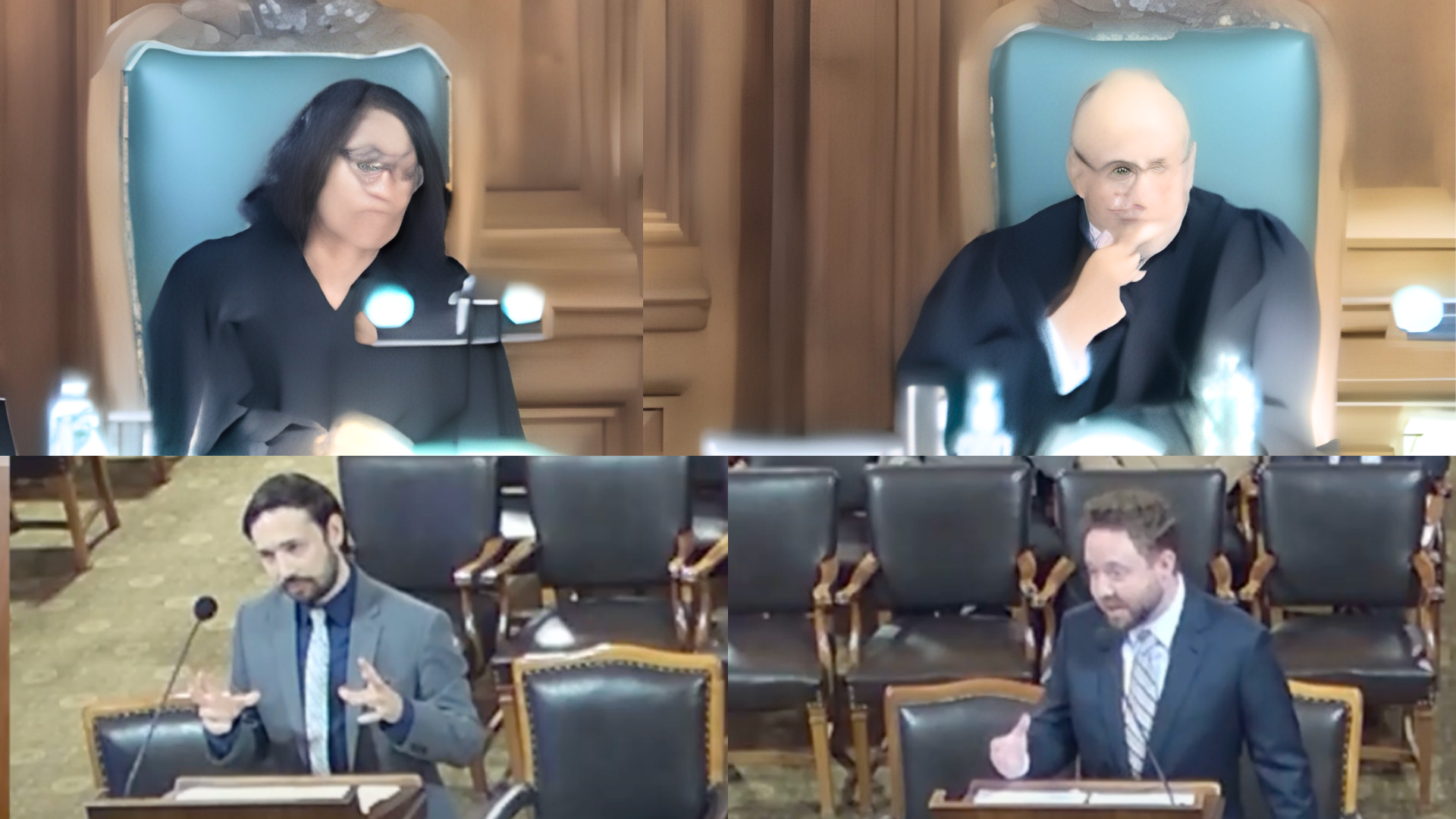
In an appeal hearing last month, a court’s live stream captured this happening on camera in real time, with an attorney caught for likely using AI-fabricated citations. On May 20, in the Supreme Court of the State of New York Appellate Division, Justices Valerie Brathwaite Nelson and Hector LaSalle reamed out that lawyer and his opposing counsel for more than 20 minutes, calling the situation “striking, concerning, disappointing, and saddening.”
The plaintiff in the case, Judith Landberg, is suing the city of New York after she tripped on some askew bricks on the sidewalk that were pushed up by tree roots. In that hearing, her lawyer, Michael Sanders, was attempting to argue the definition of a sidewalk. The full video is here, and the portion about fake citations begins a little after the 19 minute mark.
“In preparing for this oral argument and reviewing the brief of appellant, it came to the attention of the court that the brief submitted by plaintiffs cites at least three cases that appeared to be fictitious,” Nelson said. “None of these cases, nor the quoted language, appears to exist.”
Not only did Sanders cite cases that don’t exist, Nelson said, he cited 10 other cases that appear to misrepresent the law. “How do you respond?” Nelson asked.
Sanders instantly started digging a hole, saying that he wasn’t prepared to speak on those specific citations. Nelson promptly cut him off. “Before you go any further,” she said, “let me point out to you that Rule 3.3 A of the rules of professional conduct indicates that a lawyer shall not knowingly make a false statement of fact or law to a tribunal, or fail to correct a false statement of material fact or law previously made to the tribunal by the lawyer.”
He stammered. “If there's any citations that are incorrect, my deepest apologies,” he said.
“Where did you get them from?” LaSalle asked.
“I don't know what these cases were specifically,” Sanders said.
LaSalle and Nelson grilled Sanders for several more minutes about the citations and where he got them. The judges didn’t bring up generative AI specifically, but considering the growing epidemic of lawyers including fake citations while using AI to draft arguments and appeals, it’s almost certainly what they’re alluding to. Attorneys caught using AI in other cases have blamed everything from head colds to being in a rush, to paralegals. Judges, in general, seem sick of it.
“Just so you know, because I don't want you to dig a bigger hole here, you're citing principles that don't exist,” LaSalle said. “Let me tell you something. We saw this last week. I was hopeful that, in preparation for today, that you were going to read this and say, 'Oops, we made a mistake, Judge.’ It happens sometimes, right? That's what I was hoping for. We didn't get that. Should we give you some time right now to go look these cases up?”
Sanders replied that it would probably take longer than 15 minutes. They went back and forth, with LaSalle and Nelson taking turns trying to impress upon Sanders that this is very, very bad.
Ross Friscia, the attorney representing the owner of the property that faces the sidewalk, stood up before the judges next. He started to speak, but LaSalle wasn’t finished with the dressing-down. “He’s raising a court of appeal standard that doesn’t exist,” LaSalle said, interrupting Friscia. “He was using it as a component of his argument, and you didn't think you should bring it to our attention?”
“I didn't notice in particular that the principle of law that he was citing was incorrect,” Friscia said.
“I'm sorry, I'm going to give you every opportunity to make your argument,” LaSalle said. “But I'm befuddled. I honestly am. I'm absolutely—and I'm not here to—lawyers make mistakes. It's not an easy profession. I don’t want to sit here beating up on lawyers, but we rely on the bar so much in what we do. So the first thing that I did, I don't want to speak for my colleagues, but after seeing what he wrote, when I went to your papers, I expected to see something referencing [...] It wasn't one case, counsel, it was several cases, and you didn't see fit to bring it to our attention either. It's just striking to me.”
Friscia, now with the fear of the bar in him, apologized profusely. “Your honor, I apologize to the court. I will do further due diligence going forward from this point on.”
“I hope so,” LaSalle said. “You should apologize to your client, not to me.”
“Yes, I apologize for that,” Friscia said. “And I will, going forward, check every single case, even if it stands for, you know, general principles of law, like the construed liberally to effectuate remedial purpose, and things like that. I will bring them to the court’s attention.”
At this, Nelson jumped in: “The misrepresentations here are of such a degree that they could not merely reflect a difference of opinion,” she said. “As an appellate court attorney, you would have to, if you were doing the work and reading the briefs and responding to the briefs, you would have to notice that something in the wording of the main brief for the appellant was wrong, if not many things being wrong. It's concerning because we are all officers of the court, and there is a responsibility that you also have to notify the court to do the work, notify the court when these types of misrepresentations and fictitious cases and fictitious citations and misrepresenting the holding of a court of appeals case. I could go on and on, but if you read the brief and looked at the cases, you would have realized it was your responsibility also to alert the court.”
Friscia said he tailors briefs to respond to specific issues but didn’t keep explaining himself for long; he apologized again, repeated that he’d be more thorough next time, made his point about the city being responsible for the askew bricks, and sat down.
Subscribe
Next up was Elizabeth Freedman, an attorney representing the City of New York. She got the same questioning from Nelson: “So, how do you explain your failure to bring to the attention of this court that a brief was filed with this court by appellant's counsel with apparent fabrications and misrepresentations?”
Freedman tried to explain. “I certainly read the briefs,” she said. “I certainly read all of the briefs here, but I certainly didn't focus on it, because it was not our issue. And I do apologize to the court for not catching that, but I tended to focus more on the issue of prior written notice.”
When Freedman finished, all of the attorneys stood up and attempted to leave quickly. “Don’t go anywhere yet,” LaSalle said. “Have a seat. I just want to say this to you all. This is a very distressing situation. I know this is an outlier. We're very fortunate, my colleagues and I, we have the privilege of working with what I think is one of the best benches in the state, the bars in the state. For me the appellate bar here in the city of New York and its surrounding suburbs, we see excellent work. For me personally, it's been a highlight of my career to have the opportunity to work with such outstanding judges, and to have the opportunity to work with such outstanding lawyers,” he said. “A part of this profession, a big component of it, is that there's an element of trust, and mistakes are made. We make mistakes as judges, we've made mistakes. I don't want to speak for my colleagues, but I dare say that we've all made mistakes as practitioners, and we work very hard when there are mistakes to try to give the benefit of doubt to those lawyers who practice before us. We know how difficult your respective jobs are. And in reviewing this, I know my colleagues and I have tried to give every benefit of the doubt to the lawyers before us.”
He went on to say that the citing of false cases that don't exist and quotes that have no support in the law is “well below the standard we expect from the bar.” He said it’s “striking, concerning, disappointing, and saddening to think that members of the bar would forward cases to a court that don't exist, and to think that the lawyers on the other side of that didn’t read it for whatever reason, didn’t check it.”
Sanders got up and tried to apologize again before leaving. “You’ll have an opportunity to apologize in a different way,” LaSalle said. “Why don’t you do your research and find out how that happened, though?”
Sanders and his law firm were ordered to show cause as to why they shouldn’t be sanctioned. On Wednesday, Landberg’s case was dismissed.