Advertisement
News

Kohler's Smart Toilet Camera Not Actually End-to-End Encrypted

Gives new meaning to the 'internet of shit.'
Kohler's Smart Toilet Camera Not Actually End-to-End Encrypted
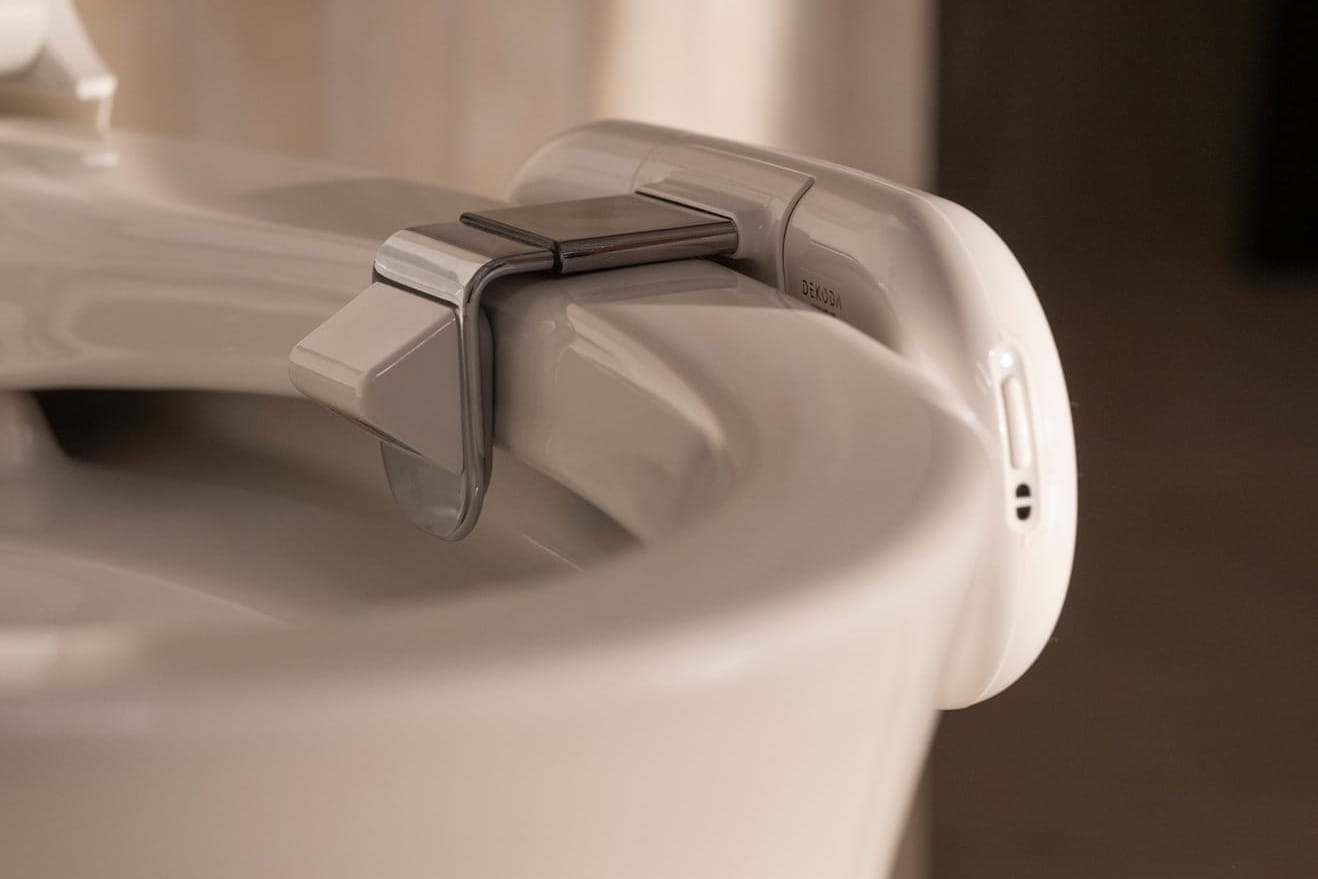
Kohler promotional image.

Home goods company Kohler would like a bold look in your toilet to take some photos. It’s OK, though, the company has promised that all the data it collects on your “waste” will be “end-to-end encrypted.” However, a deeper look into the company’s claim by technologist Simon Fondrie-Teitler revealed that Kohler seems to have no idea what E2EE actually means. According to Fondrie-Teitler’s write-up, which was first reported by TechCrunch, the company will have access to the photos the camera takes and may even use them to train AI.

The whole fiasco gives an entirely too on-the-nose meaning to the “Internet of Shit.”

Kohler launched its $600 camera to hang on your toilets earlier this year. It’s called Dekoda, and along with the large price tag, the toilet cam also requires a monthly service fee that starts at $6.99. If you want to track the piss and shit of a family of 6, you’ll have to pay $12.99 a month.

What do you get for putting a camera on your toilet? According to Kohler’s pitch, “health & wellness insights” about your gut health and “possible signs of blood in the bowl” as “Dekoda uses advanced sensors to passively analyze your waste in the background.”

If you’re squeamish about sending pictures of the “waste” of your family to Kohler, the company promised that all of the data is “end-to-end encrypted.” The privacy page for the Kohler Health said “user data is encrypted end to end, at rest and in transit” and it’s mentioned several places in the marketing.

It’s not, though. Fondrie-Teitler told 404 Media he started looking into Dekoda after he noticed friends making fun of it in a Slack he’s part of. “I saw the ‘end-to-end encryption’ claim on the homepage, which seemed at odds with what they said they were collecting in the privacy policy,” he said. “Pretty much every other company I've seen implement end-to-end encryption has published a whitepaper alongside it. Which makes sense, the details really matter so telling people what you've done is important to build trust. Plus it's generally a bunch of work so companies want to brag about it. I couldn't find any more details though.”

E2EE has a specific meaning. It’s a type of messaging system that keeps the contents of a message private while in transit, meaning only the person sending and the person receiving a message can view it. Famously, E2EE means that the messaging company itself cannot decode or see the messages (Signal, for example, is E2EE). The point is to protect the privacy of individual users from a company prying into data if a third party, like the government, comes asking for it.

Kohler, it’s clear, has access to a user’s data. This means it’s not E2EE. Fondrie-Teitler told 404 Media that he downloaded the Kohler health app and analyzed the network traffic it sent. “I didn't see anything that would indicate an end-to-end encrypted connection being created,” he said.

Then he reached out to Kohler and had a conversation with its privacy team via email. “The Kohler Health app itself does not share data between users. Data is only shared between the user and Kohler Health,” a member of the privacy team at Kohler told Fondrie-Teitler in an email reviewed by 404 Media. “User data is encrypted at rest, when it’s stored on the user's mobile phone, toilet attachment, and on our systems.  Data in transit is also encrypted end-to-end, as it travels between the user's devices and our systems, where it is decrypted and processed to provide our service.”

If Kohler can view the user’s data, as it admits to doing in this email exchange with Fondrie-Teitler, then it’s not—by definition—using E2EE. Kohler did not immediately respond to 404 Media’s request for comment.

“I'd like the term ‘end-to-end encryption’ to not get watered down to just meaning ‘uses https’ so I wanted to see if I could confirm what it was actually doing and let people know,” Fondrie-Teitler told 404 Media. He pointed out that Zoom once made a similar claim and had to pay a fine to the FTC because of it.

“I think everyone has a right to privacy, and in order for that to be realized people need to have an understanding of what's happening with their data,” Fondrie-Teitler said. “It's already so hard for non-technical individuals (and even tech experts) to evaluate the privacy and security of the software and devices they're using. E2EE doesn't guarantee privacy or security, but it's a non-trivial positive signal and losing that will only make it harder for people to maintain control over their data.”

Advertisement