
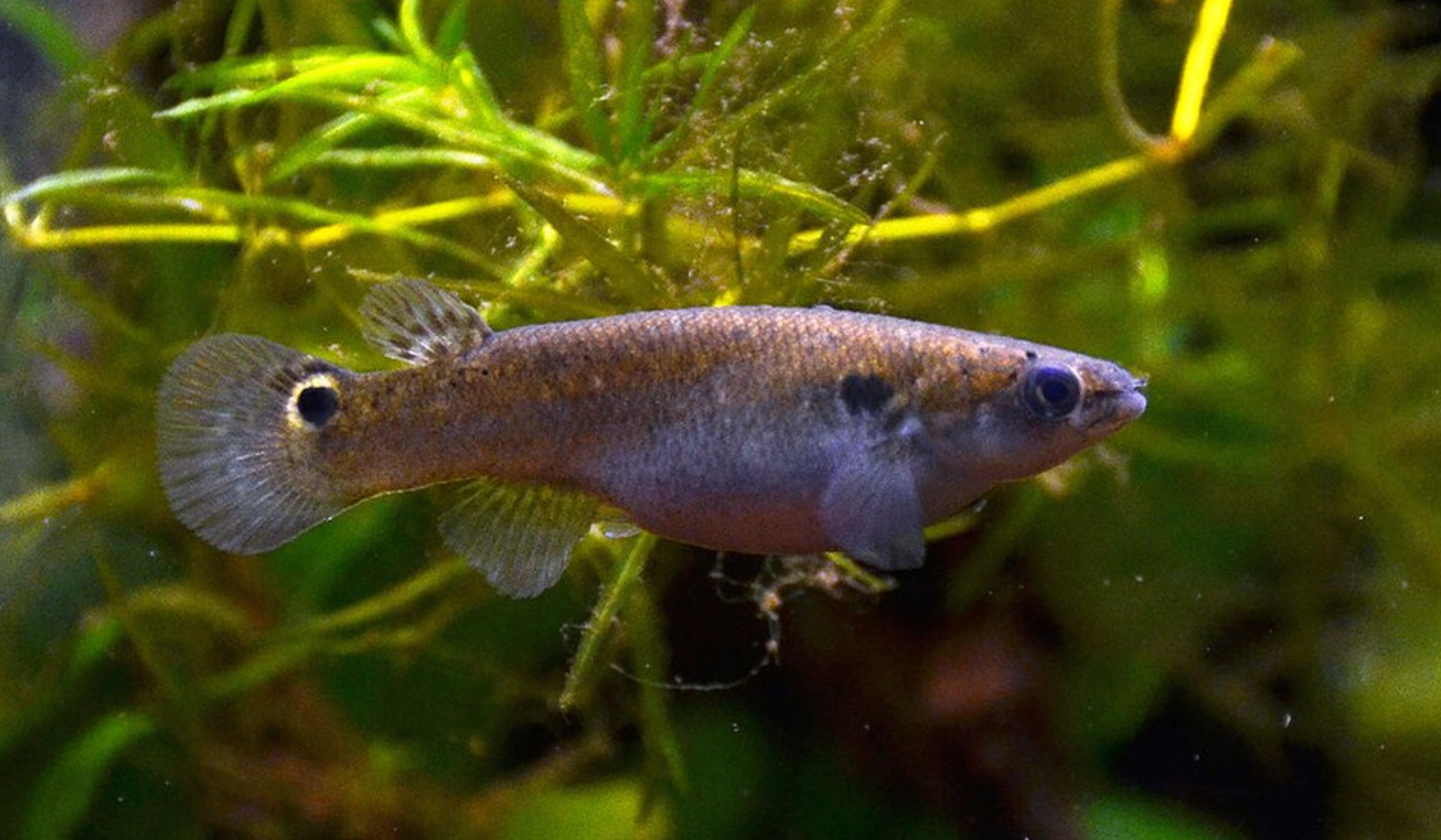

Move over, coked-up salmon. Fish dosed with psilocybin, the psychoactive component found in magic mushrooms, showed less aggression toward peers compared to their normal behavior in laboratory experiments, according to a study published on Thursday in Frontiers in Behavioral Neuroscience.
Scientists have studied the effects of psilocybin on humans and a variety of other mammals, but fish offer unique insights into the effects of this compound due to their wide varieties of social structures and activity levels. The research is the first to “demonstrate that psilocybin reduces aggression in any animal model,” according to the study, and opens the door to future studies that might pin down the neural mechanisms that underlie these behavioral changes.
 Becky Ferreira
The mangrove rivulus fish (Kryptolebias marmoratus) is particularly intriguing as a highly aggressive fish with incredible adaptations, including the ability to survive out of water for months at a time. It is also a rare hermaphroditic species that reproduces mainly through self-fertilization, producing clones that remove genetic variation as a factor in experiments.