
Welcome back to the Abstract! Here are the studies this week that roamed a superocean, took to the skies, grabbed some grub, and watched alien auroras.
First, check out some 512-million-year-old guts, brains, and tentacles. Gnarly! Then, dig into the mega-importance of Microraptor, some entomological edibles, and more weird radio signals from outer space.
As always, for more of my work, check out my book First Contact: The Story of Our Obsession with Aliens or subscribe to my personal newsletter the BeX Files.
Blast from the Cambrian past
Paleontologists have discovered the remains of a vibrant ecosystem that existed more than half a billion years ago, revealing dozens of strange species that have never been seen in the fossil record before.
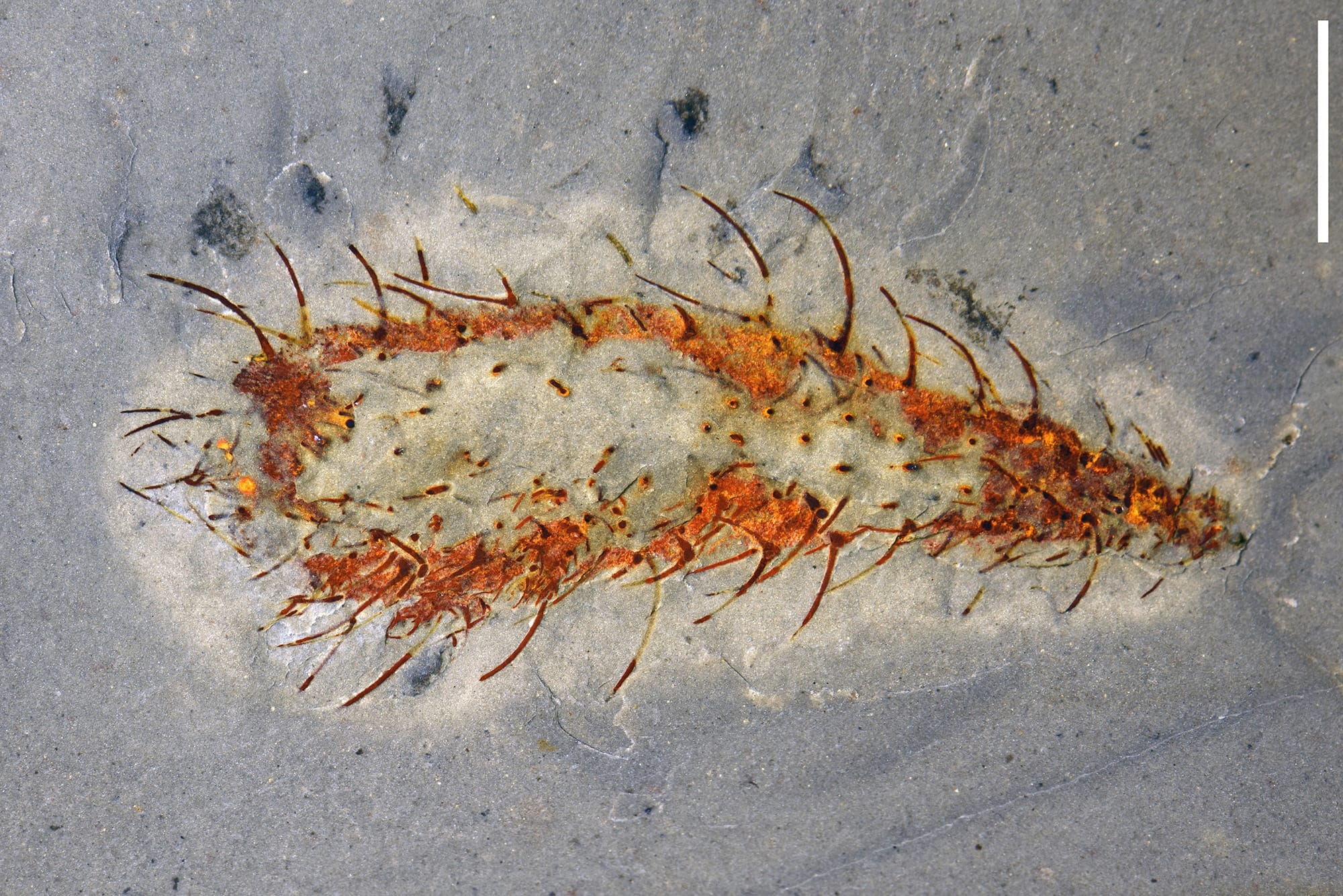
Found in the southern mountains of China’s Huayuan County, this fossilized snapshot offers an unprecedented glimpse of the creatures that were crawling (or swimming, or slithering, etc.) through the oceans 512 million years ago, during the Cambrian period, when complex life on Earth first went into overdrive.
Between 2021 and 2024, paleontologists unearthed thousands of specimens at this site, which yielded “remarkable taxonomic richness, comprising 153 animal species…among which 59 percent of species are new,” according to researchers co-led by Han Zeng and Qi Liu of the Chinese Academy of Sciences.
Many of the same animals have been found at other Cambrian sites—such as Canada’s famous Burgess Shale—suggesting that species dispersed widely through the vast superocean that existed at this time, traveling by ocean currents or even “floating rafts,” the team said.
Not only is this ecosystem notably diverse, but the fossils have remained unusually intact in the ancient mudstone, allowing for the preservation of soft tissues like tentacles, guts, and a nearly-complete nervous system found in one arthropod.
“The biota is comprised overwhelmingly of soft-bodied forms that include preserved cellular tissues” in a state of “extraordinary soft-tissue preservation,” the team said.
The middle Cambrian period famously featured an “explosion” of complex Earthlings that rapidly proliferated from about 538 to 518 million years ago. While 20 million years is a long time from a human perspective, this was a sudden and dramatic event for life on Earth as a whole, which had previously been confined to microbial form for billions of years. The newly-discovered Huayuan biota lived in the wake of the explosion and a subsequent collapse, a mass extinction called the Sinsk event.
There are way too many cool finds in this study to summarize in one humble newsletter, so I will close this up with one of my absolute favorite Cambrian weirdos: Herpetogaster, a phantasmagorical creature of tubes and tentacles depicted in the below illustration that I offer without comment.
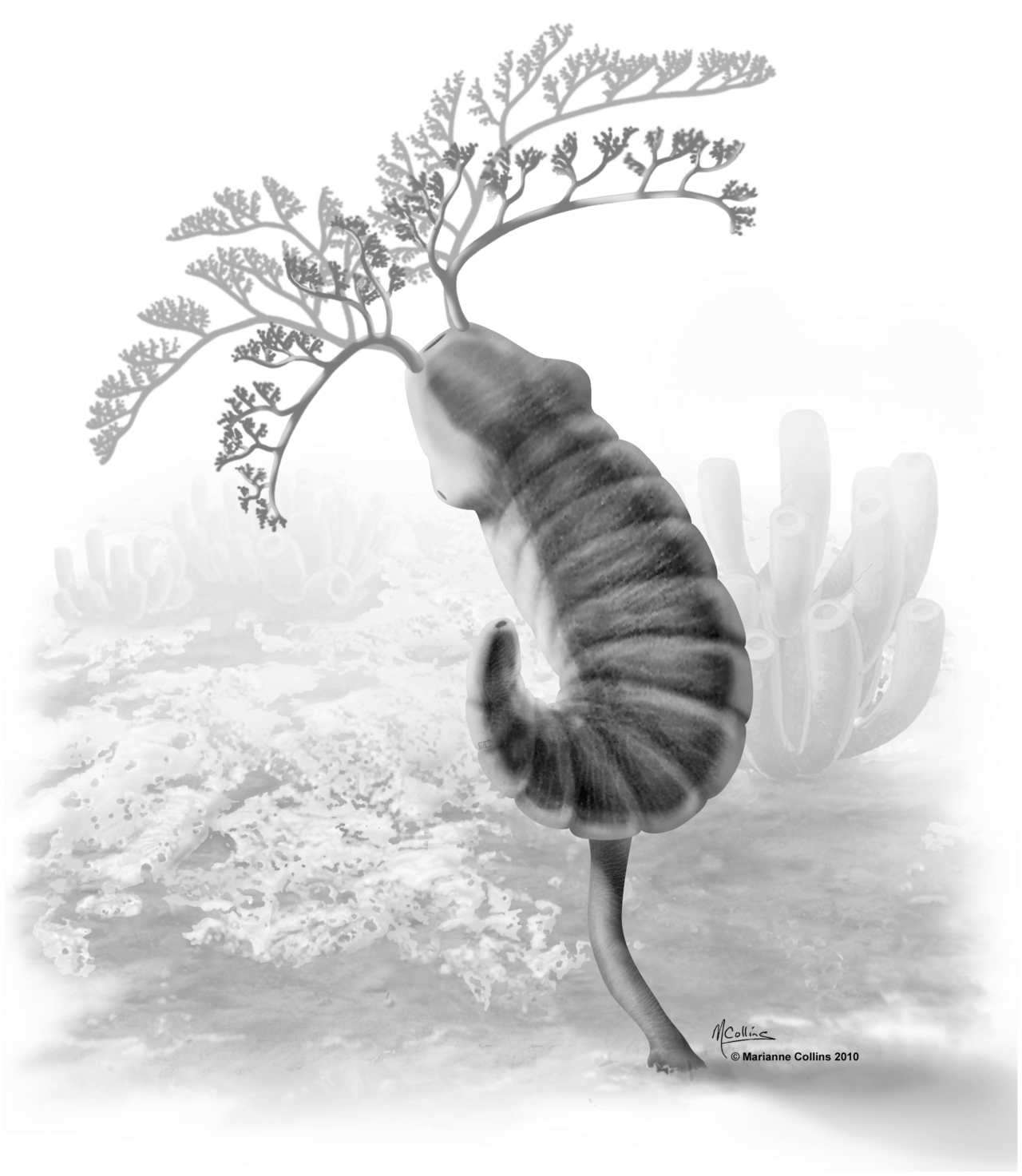
“The enigmatic cambroernid Herpetogaster—an iconic taxon first described from the Burgess Shale—is represented by over 100 specimens in the Huayuan biota, making it the most abundant entirely soft-bodied species,” said the team.
Forget gold, oil, and diamonds. There is no richer vein to tap than the Herpetogaster mother lode.
In other news…
Microraptor: the original early bird
Speaking of enchanting extinct animals, let’s glide forward in time to the early Cretaceous period, when the dinosaur Microraptor was on the wing—or more accurately, four wings. Unlike pterosaurs or birds, which sport just one pair of wings, Microraptor evolved feathered wings on both its fore and hind limbs, a body plan that has long fascinated paleontologists.
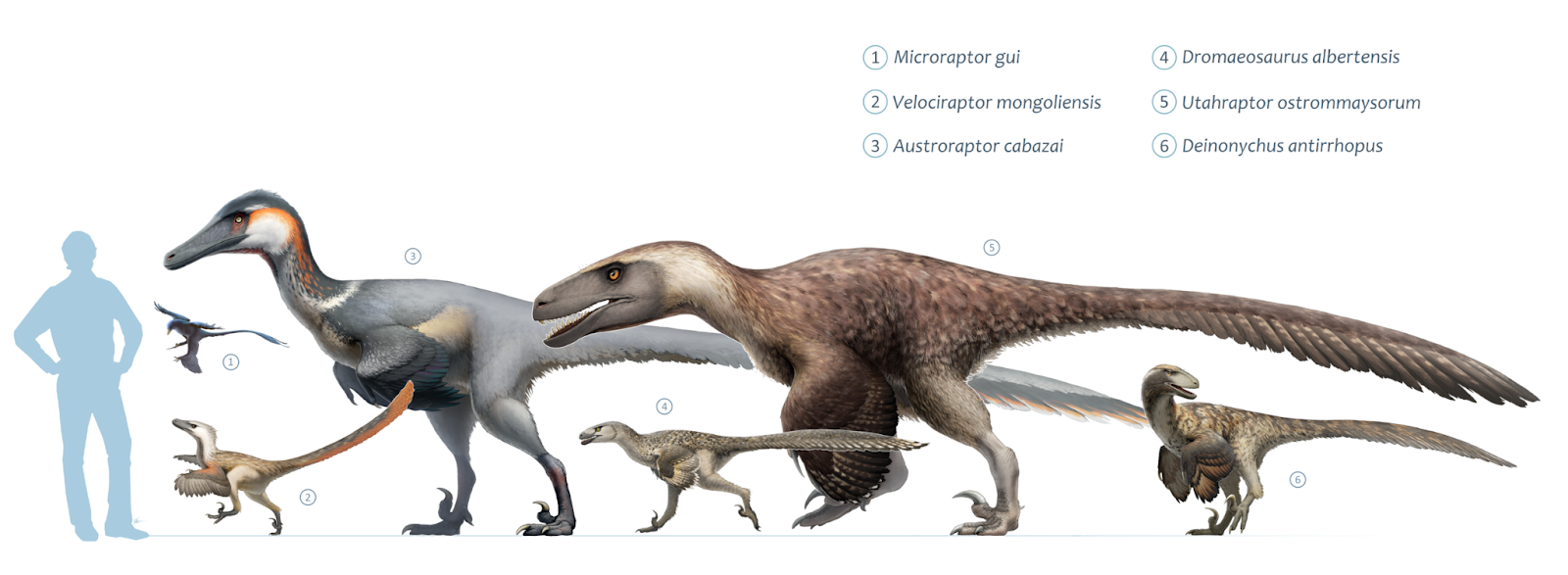
To get a better handle on how Microraptor took to the sky, researchers led by Csaba Hefler of the Hong Kong University of Science and Technology modelled its possible flight dynamics and demonstrated “the potential for beneficial interactions between the forewing and hindwing” that helped this airborne predator attack its prey.
“The specialization of the hindwing to accommodate the downstream extended tip vortex for a wide range of angles of attack is to our knowledge unique among flying animals, including four-winged insects,” the team said. “Our results suggest that greater utilization of unsteady aerodynamic features was potentially a crucial milestone of early flight development.”
Respect to this deft handler of the downstream vortex. As its name implies, Microraptor was very small, but to its prey, it was a terrifying portent of death from on high.
Grub’s up
Pass the beetle sausage and butter the larva bread, because it’s time to embrace your inner insectivore. Insects have been part of the human diet for ages—many are considered delicacies—but they have become taboo and reviled as a food source in many Western societies that view insects with disgust.
In a new study, scientists advise that we get over the ick factor, as insects could play an important part in maintaining food security in the coming decades.
“More than 2,000 insect species have been identified as safe for human consumption, offering a wide range of nutrients, including proteins, lipids, minerals, and vitamins at different life stages such as eggs, larvae, pupae, and adults,” said researchers led by Pamela Barroso de Oliveira of the Federal University of Minas Gerais in Brazil.
“In addition to their nutritional value, insect-based food production presents several environmental advantages, including lower water consumption, reduced greenhouse gas emissions, and higher feed conversion efficiency,” they add.

The study includes pictures of ground cricket, mealworm sausage, and breads made from various insect-enriched flours. Look, I’m not exactly craving crickets, but maybe we should take a lesson from Simba in The Lion King, who manages to avenge a murder and reclaim a throne on what is apparently an entirely grub-based diet. Bon appetit!
A glimpse of alien auroras
We’ll close, as all things should, with exciting radio signals from faraway planets.
Since the Sun spits out flares—sparking storms and brilliant auroras on Earth and other planets—scientists have wondered whether they might be able to detect the faint effects of analogous activity in other star systems. Now, one team thinks they have spotted these elusive signals.
“In the Solar System, low-frequency radio emission at frequencies ≲200 MHz is produced by acceleration processes in the Sun and in planetary magnetospheres,” said researchers led by Cyril Tasse of Sorbonne University. “Such emission has been actively searched for in other stellar systems, as it could potentially enable the study of the interactions between stars and the magnetospheres of their exoplanets.”
The team developed a new analysis method for analyzing archival data, which revealed events that are “fully compatible with radio emission generated by star–planet interactions, although an intrinsic stellar origin is still a possible explanation,” according to the study.
In other words, it will take more research to confirm the origin of this radio emission. But we may be getting a glimpse of the space weather beyond the interstellar horizon.
Thanks for reading! See you next week.