
Welcome back to the Abstract! Here are the studies this week that fought for their food, took one for the team, passed the extraterrestrial sugar, and got lost in an ancient haze.
First, a story about the spiciest meatball in the animal kingdom. Then: ants are being interesting again, a new discovery about an old rock, and a walk in an ancient sulfur rainstorm.
As always, for more of my work, check out my book First Contact: The Story of Our Obsession with Aliens or subscribe to my personal newsletter the BeX Files.
Pond frog versus murder hornet
Most animals don’t eat hornets, because dinner is just not as fun if it comes with a side of deadly venom and stab wounds. But a scientist has now observed an incredible exception to the rule with the humble black-spotted pond frog (Pelophylax nigromaculatus), which will straight-up house a hornet and ask for seconds.
Hornets have occasionally been found in the bellies of pond frogs, suggesting that the amphibians can tolerate their intense stings, but not much else is known about this unusual predator-prey relationship. To remedy the situation, Shinji Sugiura of Kobe University went out to the prefecture of Hyogo in Central Japan and netted a bunch of hornets from grasslands and forests—including the infamous “murder hornet” Vespa mandarinia, the largest in the world. He then captured pond frogs from wetlands with paddy fields and ponds in Hyogo and Shimane prefectures. Then, he let them duke it out in the lab in the world’s gnarliest series of cage matches.
“When a frog opened its mouth and its tongue made contact with a hornet, the action was classified as an attack on the hornet,” Sugiura said in the study. “If the frog did not stop the attack, spit out, or regurgitate the hornet, it was considered to have successfully consumed the hornet.”
The results revealed that most frogs made short work of the hornets (Videos S2) even though their meals were actively stinging them in their faces, eyes, tongues, palates, or throats of the frogs during attacks (Figure 3c,d).
“None of the frogs regurgitated the hornets after swallowing them,” Sugiura noted. “All frogs that swallowed hornets excreted the undigested body parts of the hornets as feces 2–4 days after ingestion.”
Lets just sit with that mental image of poopy undigested hornets for a second. What a nightmare. But what’s truly wild about this study is that the insects are known to inject lethal doses of venom into much larger animals, like mice, so the frogs clearly have some unknown defense against their attacks.
“Although many frogs were stung repeatedly by [hornets] in this study…none of the frogs died, and all individuals resumed normal behavior shortly after being stung,” Suguira said. “Moreover, despite repeated stings, most of the frogs ultimately consumed hornet workers…indicating a high level of predation success even against the largest hornet species.”
We humans are so lucky that when we sit down to dinner, our food generally does not try to kill us with repeated venomous needlepoint impalements. Count your blessings!
In other news…
Meet the ant-y Christs
Dawson, Erika H. “Altruistic disease signalling in ant colonies.” Nature Communications.
We’ll move now from death by frog munchies to death by team spirit. Scientists have discovered that ant pupae (baby ants) will sacrifice themselves if they are sick, lest they risk the health of the entire colony.
“Here we show…that sick ant pupae instead actively emit a chemical signal that in itself is sufficient to trigger their own destruction by colony members,” said researchers led by Erika H. Dawson of the Institute of Science and Technology Austria. “Our data suggest the evolution of a finely-tuned signalling system…that triggers pupal signalling for sacrifice. This demonstrates a balanced interplay between individual and social immunity that efficiently achieves whole-colony health.”
In other words, if an ant gets bitten by a zombie in a movie, it would immediately let everyone know and offer its life for the good of the group. Do what you will with this information.
Do you take sugar in your asteroid?
Furukawa, Yoshihiro et al. “Bio-essential sugars in samples from asteroid Bennu.” Nature Geoscience.
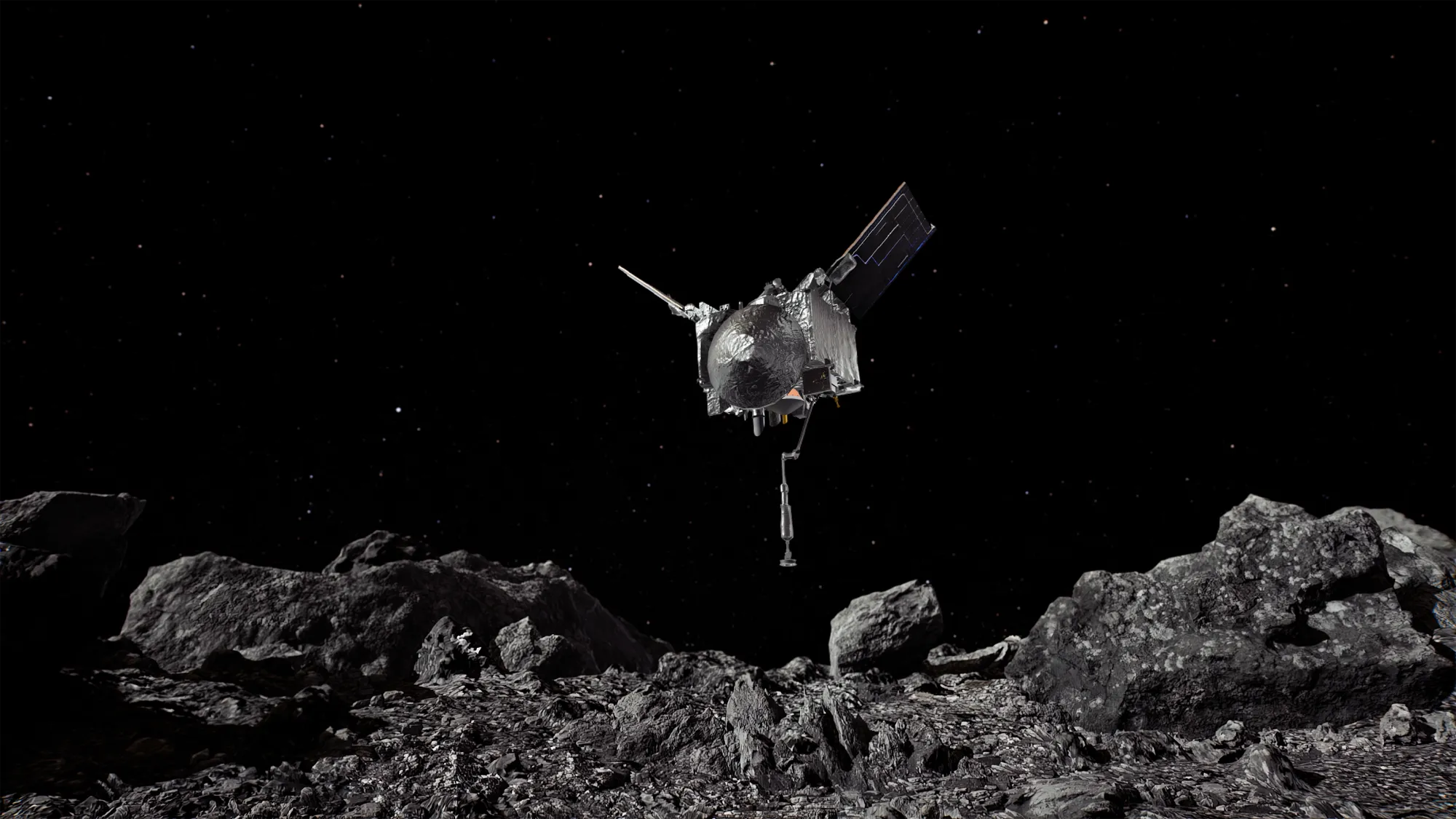
Scientists have found bio-essential sugars, including ribose and glucose, in samples of an asteroid called Bennu that were brought to Earth by NASA’s OSIRIS-REx mission in 2023. The discovery marks the first time key sugars have been found in any extraterrestrial sample. Ribose is an essential ingredient of RNA (ribonucleic acid), making it a particularly significant find in the quest to understand how life arose on Earth, and if it exists elsewhere.
“All five of the canonical nucleobases in DNA and RNA, and phosphate, were previously found in Bennu samples,” said researchers led by Yoshihiro Furukawa of Tohoku University. “Our detection of ribose means that all the components of RNA are present in Bennu.”
“Our confident detection in Bennu of abundant glucose—the hexose molecule that is life’s common energy source—and other hexoses indicates that they were present in the early solar system,” the team added. “Thus, all three crucial building blocks of life”— bio-essential sugars, nucleobases, and protein-building amino acids—”would have reached the prebiotic Earth and other potentially habitable planets.”
While Bennu bears the stuff of life, it may also be an omen of death: It has a 1 in 2,700 chance of hitting Earth on September 24, 2182. These are very low odds, but the risk is high enough to classify Bennu as potentially hazardous. So while visions of sugar plums may dance in your head this season, beware the nightmares about sugar-asteroids.
It’s raining sulfur—hallelujah!
I’ve made you walk through many valleys of death in this newsletter, but we’ll close with some unadulterated life. Scientists have discovered that many of the sulfur molecules that help make up all modern organisms may have rained down from the hazy skies of the Archean period four billion years ago.
Assuming the results are confirmed in future research, it would mean that these sulfur molecules could have predated life, upending a leading hypothesis that they were a product of life and thus emerged later.
The work challenges “the assumption that life must have ‘invented’ sulfur biomolecules during evolution…by demonstrating the production of a variety of sulfur biomolecules, including cysteine, in laboratory experiments mimicking the atmospheric chemistry of the early Earth,” said researchers led by Nathan Reed of NASA, who conducted the work while at the University of Colorado, Boulder.
“The results presented here imply that an atmospheric organic haze is a potential powerhouse in providing a diversity of essential biomolecules in sufficient quantities for a budding global biosphere,” the team concluded.
Taken together with the Bennu study, it looks as if early Earth was positively marinating in life juices from multiple sources, including the sky and extraterrestrial impactors. Though this still doesn’t explain how living things sprang up from the prebiotic stew, it provides further confirmation that the ingredients of life as we know it are spread far and wide here in our solar system, and beyond.
Thanks for reading! See you next week.