
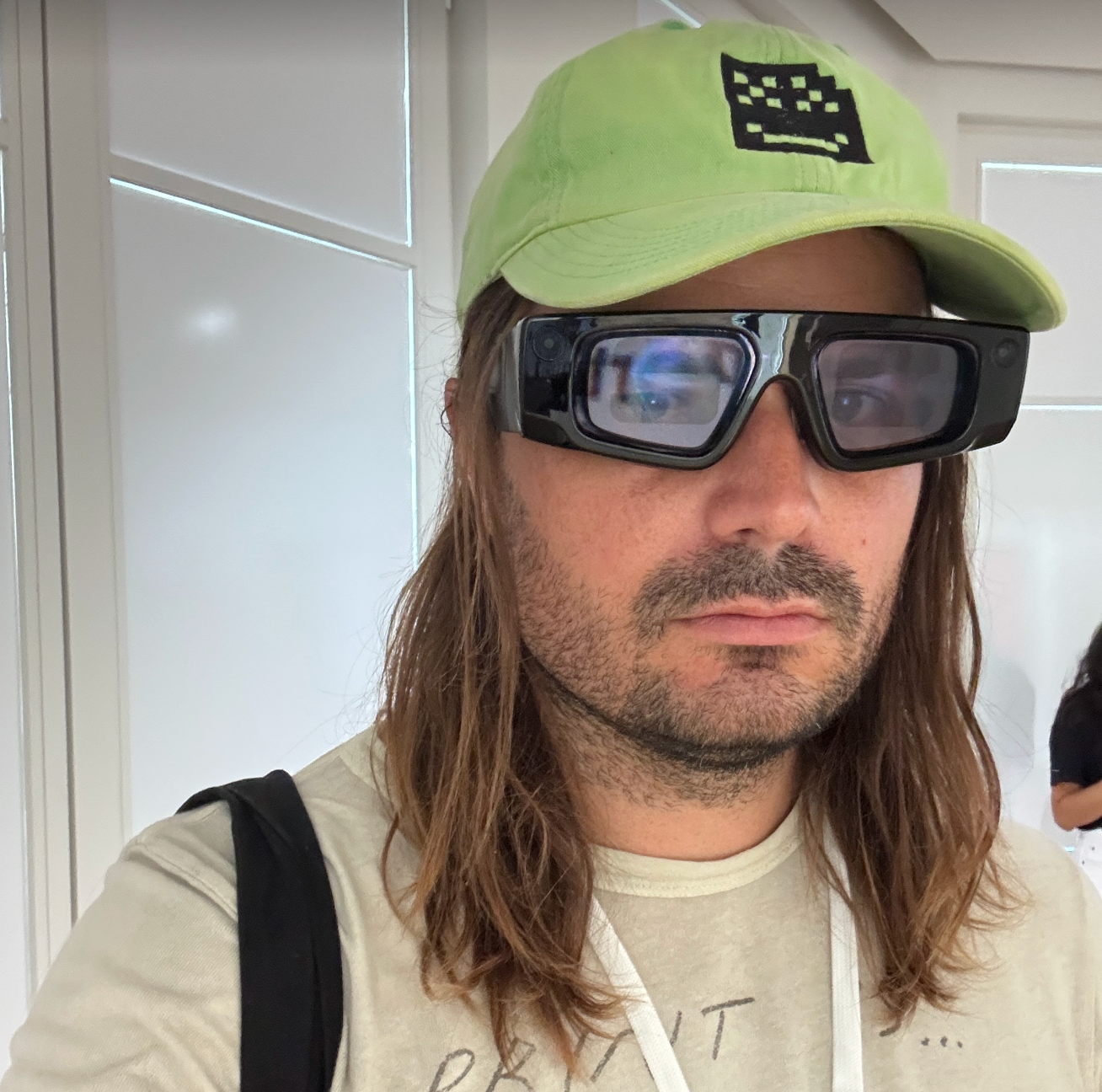
I am staring at a painted portrait of King Charles, who is wearing a red suit. The comically oversized and heavy Snap Specs I am wearing have basically created a digital version of the real painting and overlaid it over the real thing. A narrator speaking through the glasses asks me to reach out and touch a butterfly perched on his right shoulder. Through the glasses, I see a digital version of my hand reach out. The butterfly takes off and floats toward my ghostly hand. It lands on my fake fingers, and clips through them. Imagine yourself as royalty, a narrator in the Snap Specs says to me. King Charles’ face morphs into a version of my own, though it’s been run through an AI filter to look thinner, smoother, yet somehow older.
I walk to the next painting and stand on the black dot I’ve been told to stand on. The painting looks like a blank-ish canvas. I am positive I am about to see the same magic trick I’ve seen several times in the last few minutes; my face is going to be “painted” on the canvas the way it has been on several other portraits. The narrator starts talking to me. His voice is much fainter. He starts talking, and I look slightly away from the painting. The experience stops. I get a staffer to help me reset the glasses. I look back at the painting. The narrator begins talking. I slightly turn my head. The experience stops. I look at the painting again. It starts over. I remember that a staffer had told me not to look away from the paintings or the experience would stop. I do not move my head this time. Another AI version of my face appears on the canvas. I walk away, and do not feel as though I have just tried transcendent futuristic technology.
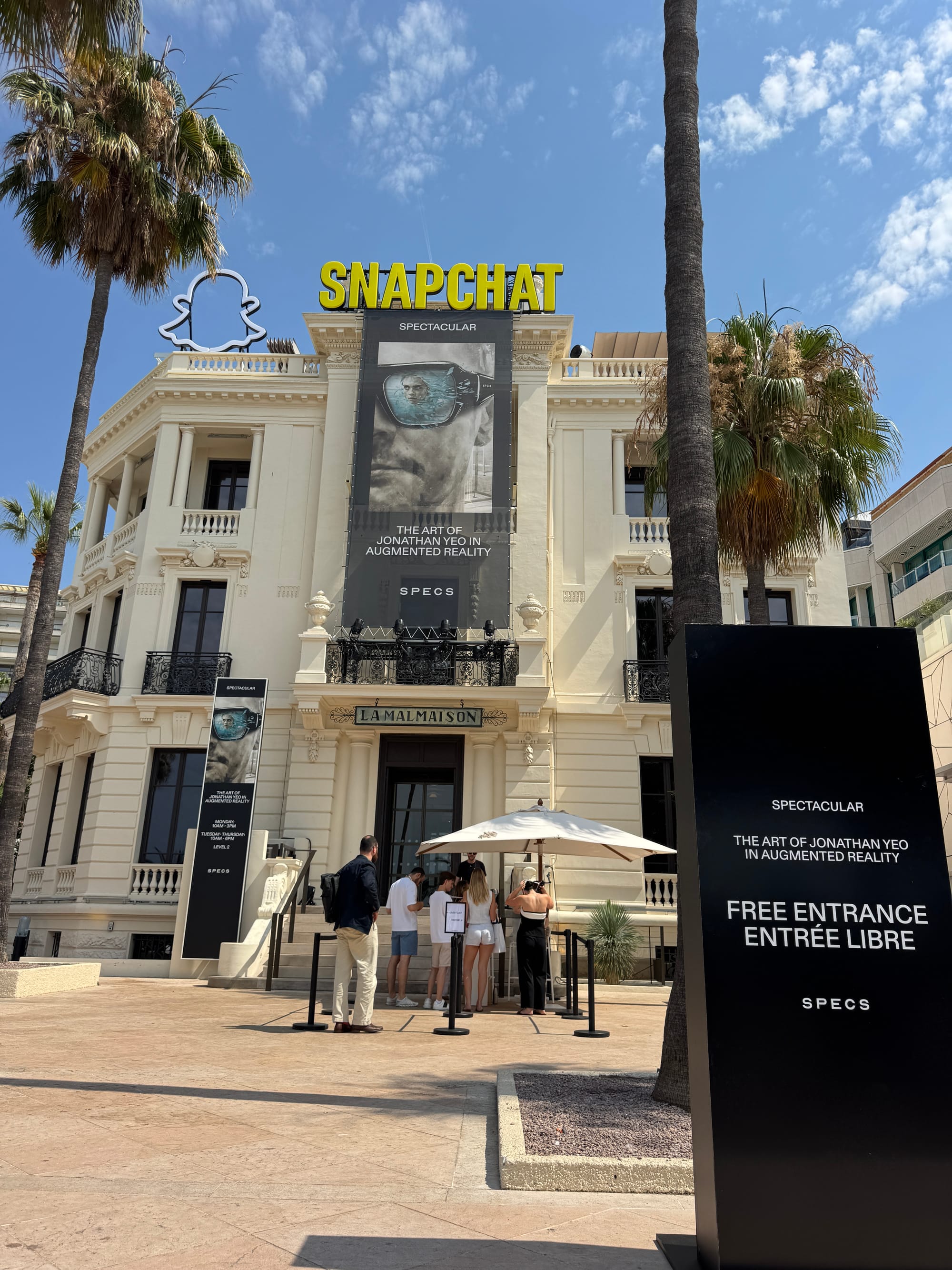
Snap let people try the glasses at “Spectacular, The Art of Jonathan Yeo in Augmented Reality,” a museum takeover at the Cannes Lions advertising festival in France, where nearly every big tech brand was pitching its platform’s advertising capabilities, and where I am working on a few stories for 404 Media. I don’t write about gadgets all that often, but with the Snap Specs getting lots of mostly negative attention and with investors actively begging CEO Evan Spiegel to not make them, I figured that, given the opportunity, I would put them on my face. Snap’s experience was tightly curated (the glasses don’t come out for four months), and was basically an audio/video tour of a few paintings of celebrities.
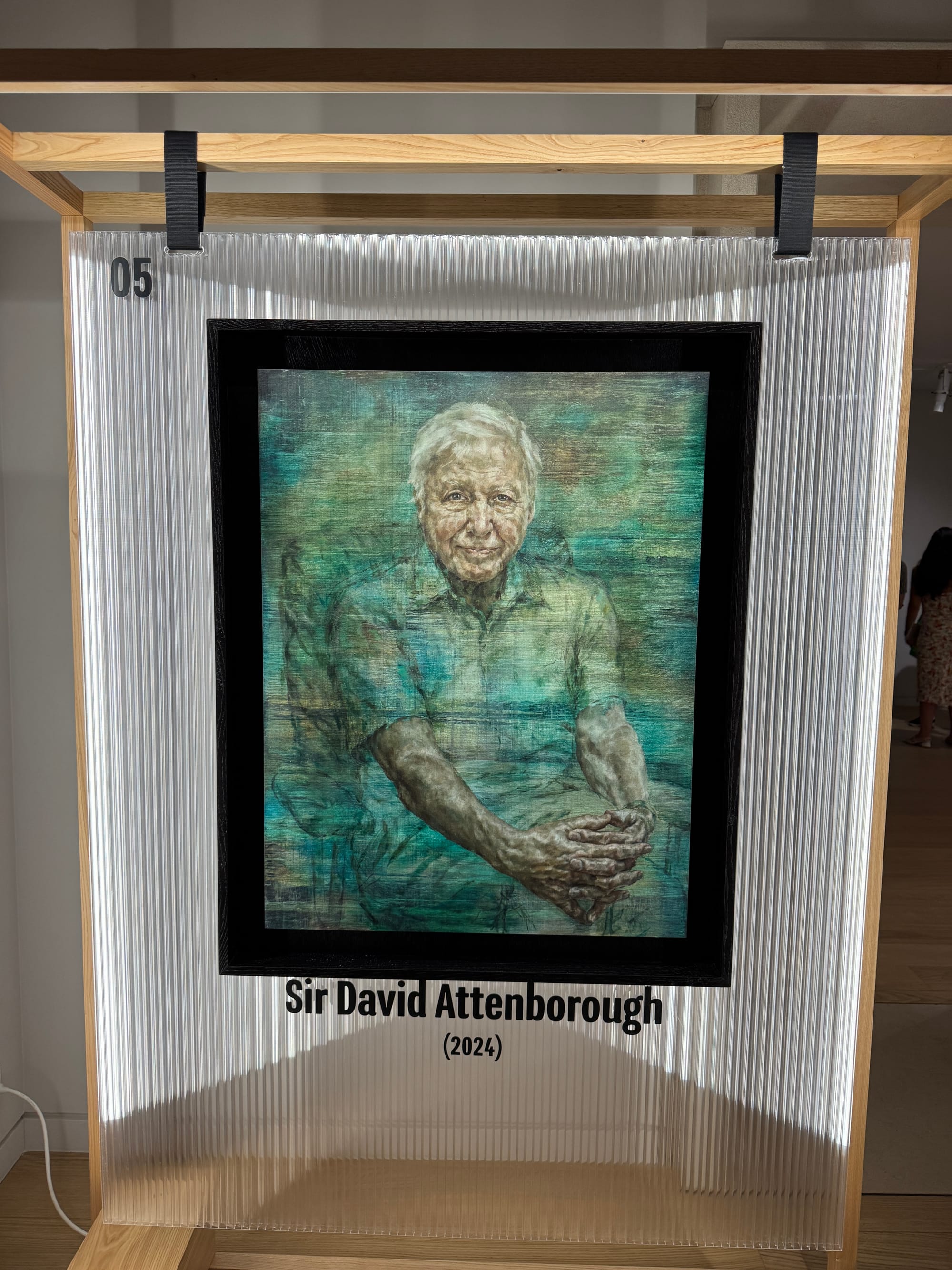
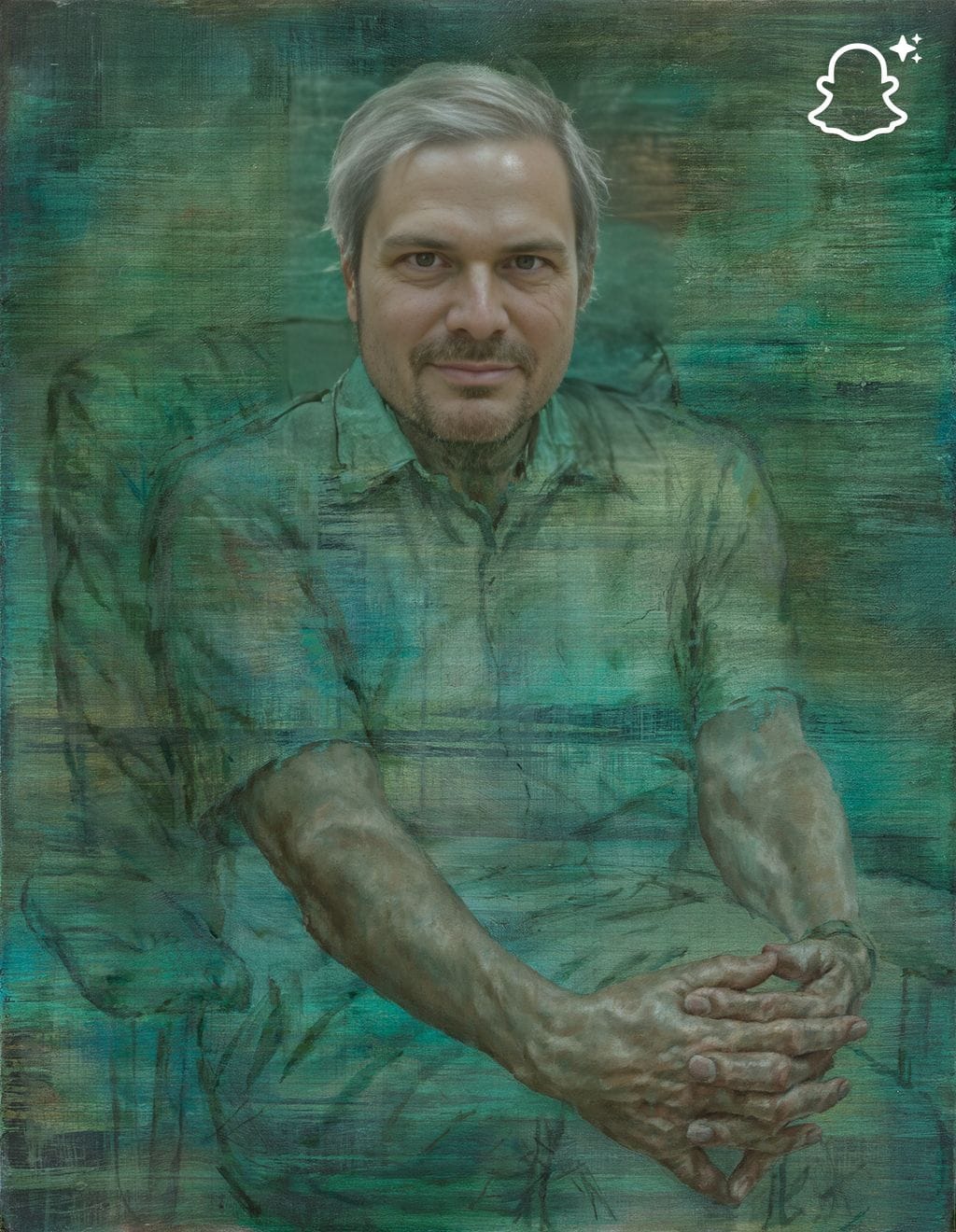
The flagship augmented reality experience for Snap’s new, widely clowned-upon glasses is essentially the same thing that brands have been doing at museums for 15 years now. Rather than use your phone to make art pop off the wall, it uses the $2,195 glasses that weigh “just 132 grams,” a Snap press release says (most regular glasses weigh between 25-50 grams) to make paintings of celebrities blink at you. At the beginning of the experience, my face was scanned on an iPad and then was presumably run through various AI filters to let me replace celebrity faces with my own. A portrait of Jony Ive in which he is holding an iPhone put my face on that iPhone, for example. A portrait of David Attenborough allowed me to “look into the past” and “look into the future” by running my face through different age filters; the result was an AI-ified version of me with a tiny head and a goatee as a child, wearing an enormous hat, and an older version of myself that I could flick back and forth to with my hand.



This was the type of brand experience I’ve done a million times at different conferences and it was so surface level as to be barely notable, but the glasses are indeed very heavy. They didn’t hurt to wear on my big head for 10 minutes, but I couldn’t imagine wearing them much longer than that. The visuals didn’t make me dizzy or nauseous like some virtual reality glasses have, but the visuals and audio also weren’t that great, and the glasses are augmented reality rather than fully engrossed virtual reality. There were clipping issues and, again, the experience stopped if I even slightly turned my head away from a painting—it is hard to imagine these things working well in real life. I have tried other VR and AR demos. So many are like this. They all have problems even in highly controlled environments and barely do anything more than your phone can do, with the added bonus of being incredibly expensive, uncomfortable, and branding you as an asshole. It was hard to imagine trying these and not dunking on them and, indeed, what I thought would happen did come to pass.
This is to say nothing of the privacy concerns associated with shoving AI into a camera and pair of comically large display glasses. We have written repeatedly about these dangers and they are not worth delving back into in a Snap-specific context, because these glasses are so big, heavy, dorky, and expensive that it is impossible to fantasize a world in which anyone wears them.