A city in Oklahoma tried to charge a farmer more than $17,000 to fulfill a public records request for information related to a proposed data center and the farmer’s arrest at a city council meeting. Now, in a win for the farmer, the State’s attorney general has stepped in and told the city to drop the fees and “provide access promptly” to the documents.
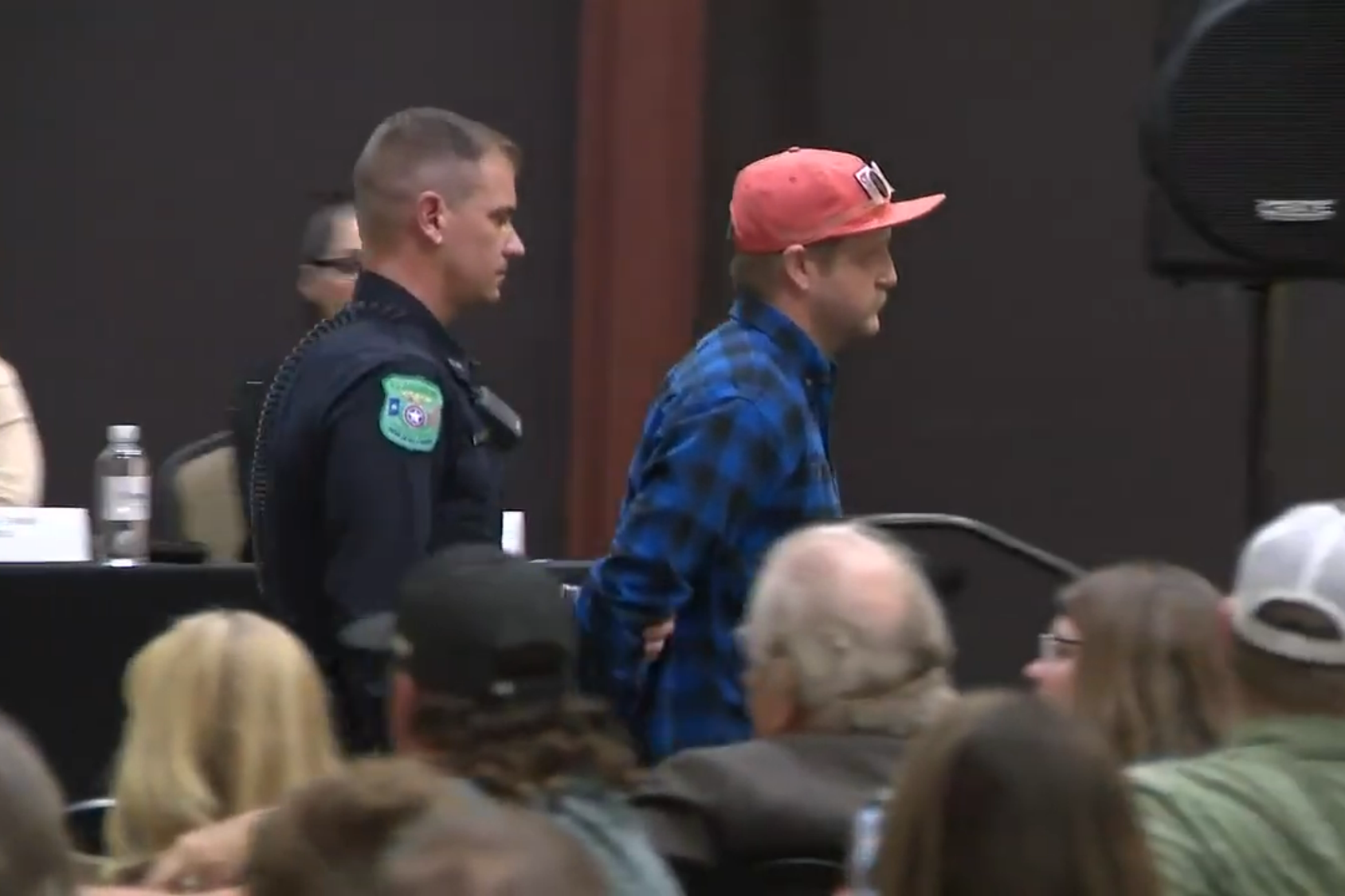
Farmer Darren Blanchard attended a meeting about Project Mustang — a proposed 225 acre data center in Claremore, Oklahoma — in February and planned to speak in opposition to the project. He left in handcuffs after the city council ordered him arrested for going 30 seconds over his allotted three minute speaking limit.
Claremore charged Blanchard with trespassing, a municipal crime with a $200 penalty. Blanchard pleaded not guilty, hired an attorney, and vowed to fight the charges on free speech grounds. As part of his defense, Blanchard and his lawyers filed a public records request asking the bodycam footage from the arrest and city records related to previous disturbances at public meetings. Claremore told Blanchard and his lawyers that they’d be happy to fulfill his request, but it would cost $17,125.44.
Katie Griffin, one of Blanchard's lawyers, filed a complaint with the Oklahoma Attorney General about the fees and requested someone at the State take a look. Claremore sent its own letter to the AG, outlining why it thought the fees were justified. “The City knows and is aware that any documents released to Mr. Blanchard and to those associated with him, regardless of the privacy implications of individuals named in such documents, are subject to wide distribution, including on social media,” said Claremore’s lawyers in a copy of the letter obtained by 404 Media.
Claremore’s lawyers also complained that Griffin wouldn’t narrow the focus of her request.“Her persistence in maintaining an overly onerous request demonstrates that this dispute has nothing to do with transparency and likely has everything to do with causing excessive time/money expense to the City in order to generate public sympathy for her client and negative publicity for the City,” Claremore’s lawyers said.
The bulk of the fees Claremore wanted to charge are for a legal review of 2,800 records related to Blanchard’s arrest and Claremore’s relationship with security contractors and Rogers State University where the meeting took place. Claremore said that the legal review “to ensure that all information which must be withheld relating to members of the public and the City’s personnel is redacted in order to protect their privacy” would cost $16,540.44.
Claremore also wanted to charge a fee of $585 for a 15 hour search — roughly what it costs to employ a city clerk for two days. To do otherwise, the city argued, would cause “excessive disruption to its essential functions,” according to a letter Claremore’s lawyers sent to the Oklahoma Attorney General’s office.
Anthony Sykes, an Assistant Attorney General for Oklahoma, didn’t accept Claremore’s argument, according to a copy of his response obtained by 404 Media. Sykes explained that Oklahoma’s laws only allowed the City to charge for “direct costs of record copying, or mechanical reproduction.” A public body can charge fees for records requests, but only for the direct cost of searching and copying. Critically, if it charges fees at all it must disclose them publicly.
“The City has not posted a schedule of fees as required by the Open Records Act. Having failed to give the requisite notice of the fees charged for public access to City records, the City is foreclosed from charging search fees,” Sykes said. “If I were to conclude otherwise, there would be no incentive for public bodies to comply with the statute. They could simply ignore what the ORA requires and charge what they deem reasonable on a case-by-case basis.”
“I also note that the City also failed to explain how 15 hours of staff time would cause ‘excessive disruption’ of its ‘essential functions,’ such that a search fee would be statutorily permissible in the first place,” Sykes added in a footnote. “Similarly, the City has not provided any justification for charging the hourly rate of the City Clerk — as opposed to a less costly member of the Clerk’s staff — to search for the records.”
Claremore also said it had found more than 10 hours of bodycam footage from Blanchard’s arrest but, again, needed time to review it “to ensure all available redactions are made to protect the privacy of the public and City personnel,” Claremore’s lawyers said. “Much of the footage at issue in Ms. Griffin’s request was taken in a very crowded room and features an incalculable number of people. A review of this footage by legal counsel is required in order to determine what, if any, portions should be redacted as required by law.” 404 Media acquired a portion of the bodycam footage from Blanchard’s arrest and published it in June.
Sykes told Claremore to release the footage without a lengthy review and redaction process. “The footage sought here is of a public meeting attended by scores of people,” he said in his response to the City. “No one in attendance had any reasonable expectation of privacy, and the City has not identified any provision of state or federal law that justifies redaction of any portion of the footage [...] the City should be able to provide access promptly.”
Blanchard’s case is one of a number of people who’ve been arrested at public city meetings in the past year. Police arrested a high school teacher in Kansas for clapping during the public comment period of a city meeting about data centers. The city charged them with interfering with law enforcement and later dropped the case. In Texas a man was arrested in his driveway a week after he’d said “bullshit” during a public city meeting.
The City of Claremore, Oklahoma did not return 404 Media’s request for comment.
