On Wednesday the power flickered in homes from Washington DC to Chicago. The cause was a data center disconnecting from PJM — a massive power grid that connects 13 states including North Carolina, Virginia, New Jersey, and Michigan, a span that covers 67 million customers. The incident points to a larger problem with the compute warehouses fueling the AI boom: It’s physically and economically impossible to build power infrastructure fast enough to meet the demands of AI data centers and when problems occur, everyone will pay the price.
AI requires massive amounts of computer hardware to scale. That hardware is housed in data centers, and data centers demand shocking amounts of electricity. More data centers mean more demand on the grid which raises the costs of energy for everyone. This is one of the reasons people hate data centers and have begun to fight their construction.
To bypass the issue of grid demand, many data center builders have promised to power the buildings themselves. The problem with that plan is that it’s easy to build a warehouse full of GPUs. Building power plants and transmission lines to power those warehouses will take years and cost billions more than the data centers. A skilled and efficient builder can complete a data center construction in under a year. Building new energy generation to meet that data center's power needs could take a decade.
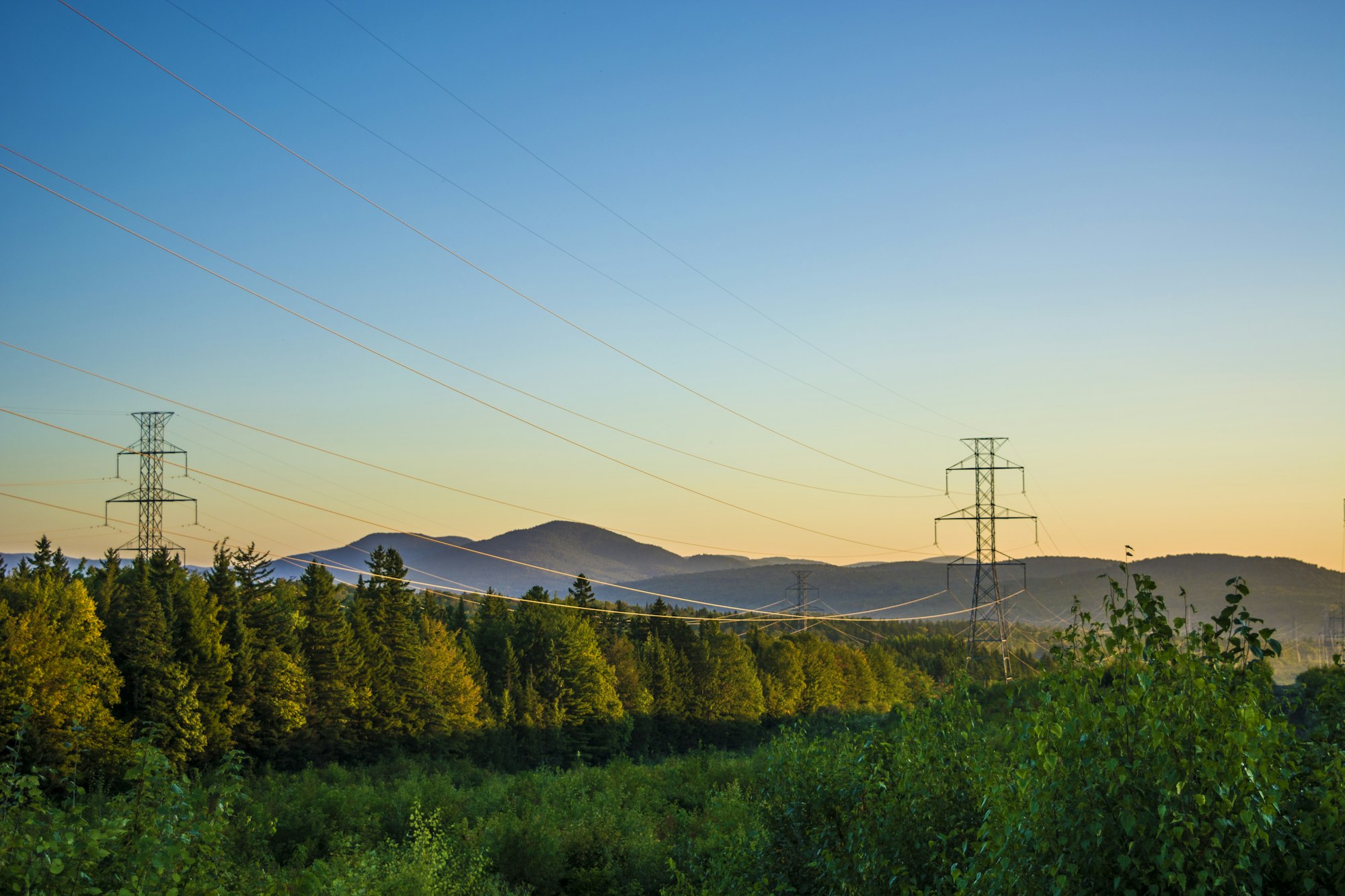
Take the humble transmission line — the long conductive cable is one of the most fundamental parts of the power grid. It moves energy from one place to another. “There is a lot that goes into planning, siting, designing and building a new transmission line,” Suzanne Glatz, an energy consultant and co-author of a John Hopkins report on the effect of data centers on the power grid, told 404 Media. “Even rebuilding a line can run into issues and cause delays. For all the reasons, planning a new greenfield line [a common type of transmission line] is likely to take 7-8 years from the date it is approved, but it can take 10 years or longer.”
There are a lot of reasons for this. “Every transmission line will have some unique aspects about it, from the geography, the voltage level, the length, the communities it touches (including the viewshed), environmental impacts, the points it interconnects to existing lines and substations, the reason it is needed as well as what are the alternatives,” Glatz said.
There are problems with other key pieces of the grid as well. Building out electricity to meet demand requires the construction of new transformers — a device that takes energy from power plants and helps distribute it to people’s homes. The power industry was struggling to build enough transformers to meet demand before the data center boom. It’s gotten worse as data centers have increased demand and tariffs have made them more expensive to build. “Large power transformers can take 1-2 years from order, but have hit longer times and major logistical challenges with delivery. Poles/towers also can long lead items, though not on par with large power transformers,” Glatz said. “All of this is likely compounded by other issues like tariffs.”
In the absence of easy, scalable, electricity solutions, things are getting weird. A company called FTAI wants to use repurposed jet engines to power data centers. The company is already in the business of refurbishing busted engines for commercial jets, but sees powering data centers as a growth market. “The accelerating demand from AI hyperscalers has created an urgent need for immediate power solutions. We believe FTAI Power will be a critical partner for the AI economy, which requires unparalleled amounts of electricity faster and in a more flexible format,” FTAI chief operating officer David Moreno told Construct Connect News.
One of the fast short-term solutions for powering data centers is to bypass the power grid altogether and generate energy on site. That’s what Shark Tank investor Kevin O’Leary wants to do in Box Canyon, Utah. But there are a lot of problems with this too. These self-powered data centers are relying on gas turbines. But those aren’t fast either. “The lead time for new gas turbines have been cited as up to five years in discussions in the PJM area,” Glatz said.
When gas turbines do come online, there are major problems. Elon Musk’s xAI operates an enormous Colossus 2 data center in Tennessee that runs on 59 natural gas turbines. This has allowed the data center to run without taxing the local grid but comes at the cost of pumping pollutants into the air at an astonishing scale.
Most of these turbines are across state lines in Mississippi, are operating without public permits and are destroying the air quality of people who live near them. Some of the gas turbines weren’t disclosed. A lawyer for the Southern Environmental Law Center told Reuters the turbines are a violation of the Clean Air Act. It may not matter. On July 27, Trump’s Environmental Protection Agency announced that power plants that exclusively keep data centers online won’t be subject to the Clean Air Act.
O’Leary’s data center would consume nine gigawatts of power, more than double Utah’s current rate of power consumption. The current plan is to pull gas from the nearby Ruby Pipeline to keep the lights on which could raise carbon emissions in the state by 64%. Utah’s governor said that the data center should never fully run on natural gas and that nuclear, solar, and wind must eventually carry the energy load.

Solar and wind face the same transformer and transmission line problems as more traditional forms of power generation. Tech companies are betting big on nuclear power, but time is against them there too. Meta, Amazon, and Google are all working on nuclear-powered solutions to their energy problem. Microsoft wants to bring Three Mile Island back online but the timeline keeps getting pushed back. Many of these tech companies are betting on some kind of technological breakthrough that will make nuclear power safer, faster, and more scalable. It hasn’t happened yet and startups working on solutions like small modular reactors have been saying they’re five years away from a breakthrough for the past decade. Nuclear power is hard and the cost of a mistake is catastrophic. Tech companies are even attempting to use AI to speed up the construction of new nuclear power plants but it remains to be seen if that’s safe or effective.
The energy infrastructure stopgap hasn’t stopped tech companies and speculators from building data centers. Every new computing warehouse drives up the demand for electricity, which spikes costs for people that live nearby. Officials in Henrico County, Virginia, which has 37 data centers, recently told government employees that the electricity bill for government and school facilities will increase by 25% and asked public servants and teachers to help them keep costs down.
Glatz said things could get worse. “In the coming years, PJM is showing a shortfall that could lead to outages for customers. One solution that we have advocated for is that data centers that connect but do not arrange for new generation, will be subject to curtailment first before other customers,” she said. “That likely means that data centers will power their operations with less efficient emergency backup generation, if that is the case. Either way, based on the load growth projections and the supply commitments, there is a thinning margin of reserve supply which will increase the risk of not enough generation in coming years, the risk being highest on the more extreme days when demand is highest.” In the U.S. and around the world, those extreme days are becoming more frequent and dangerous.