
The AI industry has been pushing a narrative that the technology is a “black box” whose inner workings are so complex that they remain unknown even to the people making it. But another black box of AI is the underlying cost of the technology, and, specifically, what the AI boom is costing people who live near massive data centers. The data centers and energy plants that power large language models and other generative AI tools are subject to contracts cloaked in non-disclosure agreements and in many cases shielded from public scrutiny on the pretext that they contain competitive information.
A new report written by consultancy Synapse and commissioned by advocacy groups Earthjustice and Environmental Advocates Mississippi attempts to calculate the cost of 3 planned Amazon data centers to Entergy Mississippi customers, who share an energy utility with the centers. These hidden costs may offer a window into the broader burden borne by residents living near data centers around the country. The report estimates that residential customers of Entergy Mississippi, one of the state’s regional energy monopolies, have paid $38 million as of March 2026 for infrastructure and other costs related to data centers and will have paid $74 million by the end of the year.
The average Entergy Mississippi customer is now paying at least an extra $10.60 a month to finance the data centers, the report says. It amounts to a 7 percent bill increase at a time when gas prices, choked supply chains and cuts to federal benefits are already hurting Americans. Entergy customers do not see costs for data centers highlighted separately in their bills.
According to report author Ben Havumaki, this only represents the costs that Entergy Mississippi customers have paid so far, and bills will likely rise.
“We know as a matter of fact that Entergy has made far more investments in service of data centers already and that the total..will be far in excess of that amount,” Havumaki told 404 Media.
The assessment was made by examining public dockets filed by Entergy Mississippi as well as the company’s Securities and Exchange Commission (SEC) filings. While Mississippi law makes a specific cost breakdown of energy bills difficult to uncover, the authors traced a line item used to specify costs of large load energy infrastructure to make their assessment.
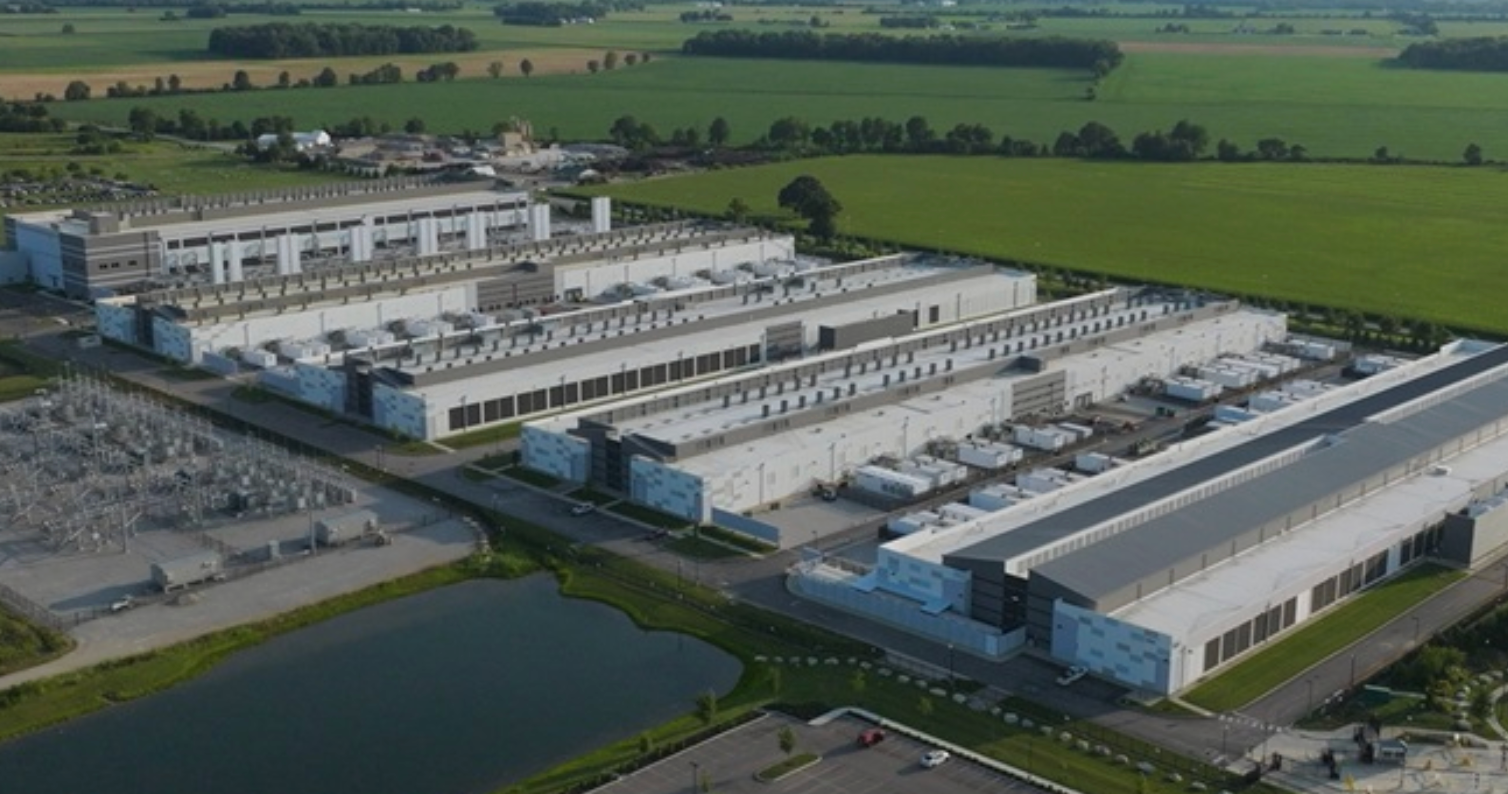
In 2024, Amazon announced it was building two new data centers in Madison County and in 2025 announced plans for a data center in Warren County.
To power the data centers, Entergy announced three new gas-fired plants in 2025 in Greenville, Ridgeland, and Vicksburg, two of which are replacing existing gas plants, as well as two solar facilities for a total cost of nearly $4 billion.
Yolanda Daniel is a member of Environmental Advocates Mississippi, which helped commission the report and opposes the data center. Daniel says that the home that she grew up in is steps from the proposed gas-powered plant in Ridgeland Entergy is building. Daniel, who spent 30 years out of the state before returning to the area last year, first learned about the power plant driving down the road dividing Madison and Hinds County, where she saw a sign notifying residents of a zoning board hearing. She said she and others helped pack the hearing in opposition.
“We named all the harms, all the studies, all the science,” Daniel says. While the Ridgeland zoning board initially voted down Entergy’s permit to examine the land, the Board of Aldermen went ahead with the plans anyway. Ridgeland Mayor Gene McGee said, “Nobody will even know it’s there, no pollution that sort of thing, and it’ll bring a lot of business to Ridgeland and Madison County,” according to the Magnolia Tribune.
Four homeowners associations, including one Daniel belongs to, filed an administrative complaint against the gas plant.
Entergy’s public messaging about the data centers focuses on the company using its newfound revenue from Amazon to make grid improvements that will lower customers’ bills in the long term. Haley Fisackerly, the company’s CEO, has argued that though energy bills are going up, they are going up at a slower pace than if the data centers were not built.
In a June 8 press release, Fisackerly touted the company’s previously announced “Superpower Mississippi” plan, which includes $300 million of grid improvements he says will save customers money by, “improving reliability and reducing power outages through stronger materials, tree trimming measures and technology-driven distribution network upgrades.” He says the improvements are funded by Amazon and Avaio, which constructs data centers. Fisackerly says that this is in addition to $600 million grid improvements the company already had planned.
The announcement assumes that Entergy would have replaced the two power plants regardless and makes hard-to-prove assertions about energy efficiency.
But the fact that Entergy Mississippi is already charging its customers for the construction of those energy plants is more straightforward, according to the Synapse report.
While Entergy Mississippi’s rate increases are typically restricted to 4 percent a year under state law, a 2024 law called SB2001 allows the company to raise rates in excess of that to fund the construction of energy plants that power data centers.
The fees show up in public dockets as an “interim facilities rate adjustment,” which is how Synapse reached its calculation of costs to residential customers. $8.7 million in fees associated with the Delta Blues Advanced Power Station were charged to residential customers, as are $46.7 million in costs related to data center projects whose specifics are unknown.
While in theory costs other than data center infrastructure could be present in this line item, “We see no evidence that that is occurring,” the author of the report, Ben Havumaki, told 404 Media. That’s because this line item was zeroed out before Entergy Mississippi began making its data center energy buildout, he said.
Entergy Mississippi shares a parent company with Entergy Louisiana, which approved three new gas plants last year to power Meta’s data center in Richland Parish, Louisiana. Entergy Louisiana has now pitched an additional seven gas plants to serve Meta’s facility.
The report also takes issue with a March claim by Entergy that agreements with data centers will actually be saving customers in three states (Arkansas, Mississippi and Louisiana) $5 billion over the next two decades. Synapse says “it is possible that data centers could be offsetting some or all of their incremental costs through separate financial arrangements with Entergy,” but there is no way of confirming this because filings between Entergy and data center operators are kept confidential.
Mississippi is a uniquely difficult state to verify Entergy’s claims that customer’s bills are being subsidized by Amazon or other tech companies. SB2001 cloaks the public service commission’s review of energy contracts from public view, designating them “a trade secret” and exempting them from the state’s freedom of information law. The law limits the Mississippi Public Service Commission’s role in making sure that data centers are distributing their costs evenly to energy utility customers. It also exempts state agencies from competitive bidding requirements when courting data centers. This means, “they can just put the shovel in the ground and start building themselves immediately without proving that they are the least costly option,” Havumaki says.
When Entergy says Amazon’s data center is saving customers money, “It's basically [saying] trust us, we've done the math and know that it works out better for you,” Havumaki says. Havumaki also notes that infrastructure costs related to data centers have skyrocketed, so Amazon has an incentive to hide costs.
The 2024 law also makes it impossible for the public service commission to adjust how much Amazon pays for its energy bills later on.
According to the law, public utilities can enter into agreements with a large customer, “without reference to the rates” set according to the state’s public utilities statute. ” SB2001 also says the utility can’t alter or edit the agreement between Entergy and the data center customer later on.
According to the report, this means, “once the Entergy-[Amazon]contract sets a cost allocation, that allocation is locked in. The Commission cannot revisit it even if future rate proceedings reveal that it is unfair to other customers. “
While the commission can’t change rates that Amazon or other tech companies pay for energy, it still has the ability to stop charging residents for energy plant construction related to data centers. But Havumaki is skeptical this would happen.
“It's highly unlikely that any commissioner would disallow recovery of any of these investments, because there is so much momentum behind this whole process,” he says.
When reached for comment about the Synapse report, a spokesperson for Entergy sent a statement saying that, “Entergy Mississippi customers are not subsidizing data centers — they’re benefitting from them. Independent regulators in Mississippi, Arkansas, and Louisiana confirm that data centers are paying their fair share, plus additional benefits for customers.”
When it comes to Entergy’s hidden contracts with Amazon and other tech companies, the spokesperson said, “Customer confidentiality doesn’t reduce accountability. The facts are clear: Technology investment is making power in Mississippi more reliable, more affordable, and more competitive.” The company did not answer any specific questions about the interim facilities rate adjustment that shows residential customers are paying for data center infrastructure.
Amazon commissioned a report on the costs of its data centers to customers. The report found that Amazon was paying, “sufficient or surplus net revenue,” meaning that Entergy could be using its profits to subsidize other customers, but that “the use of this additional margin is at the utility’s discretion.”
The Synapse report ends with a recommendation that Entergy commit that data centers’ energy needs not be subsidized by other customers. To make the process more transparent, Entergy should have a standard contract with customer protection provisions that it uses for data center customers.
To prevent “stranded assets,” or costs incurred by customers for infrastructure that ends up abandoned or unused, the report recommends charging a minimum rate to the data center regardless of use, as well as “exit fees” if the data center closes.
“These are really uncontroversial, widely adopted provisions to ensure a baseline of customer protection, a baseline of transparency, and actually hold Entergy's feet to the fire,” Havumaki said.